In combination with fulvestrant for patients with HR+/HER2− aBC or mBC with PIK3CA, AKT1, or PTEN alterations following progression on or after ET ± CDK4/6i1
In combination with fulvestrant for patients with HR+/HER2− aBC or mBC with PIK3CA, AKT1, or PTEN alterations following progression on or after ET ± CDK4/6i1
Mechanism of Disease
After exposure to 1L ET ± CDK4/6i5-12

Better treatment options have been urgently needed to improve outcomes while reducing discontinuation rates due to adverse reactions for patients with PIK3CA, AKT1, or PTEN alterations
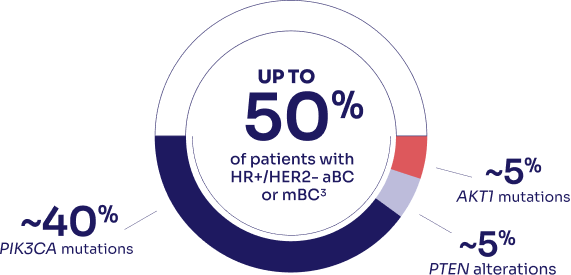
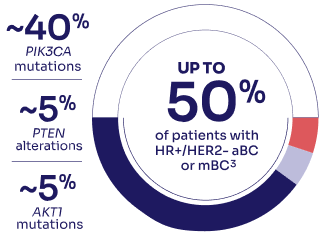
Alterations in the PI3K/AKT/PTEN pathway are associated with poor prognosis, most notably for patients with PIK3CA mutations13,14
NCCN Clinical Practice Guidelines in Oncology (NCCN Guidelines®) for Breast Cancer recommends15:
NCCN Clinical Practice Guidelines in Oncology (NCCN Guidelines®) for Breast Cancer recommends15:
Biomarker testing:
TEST patients for PIK3CA AKT1 PTEN alterations
at aBC or mBC diagnosis to inform 2L treatment planning16
TEST patients for
PIK3CA AKT1 PTEN
alterations at aBC or mBC diagnosis to inform 2L treatment planning16
TRUQAP Mechanism of Action
TRUQAP inhibits oncogenic signaling driven by PIK3CA, AKT1, or PTEN alterations12,17,18
As observed in preclinical models:
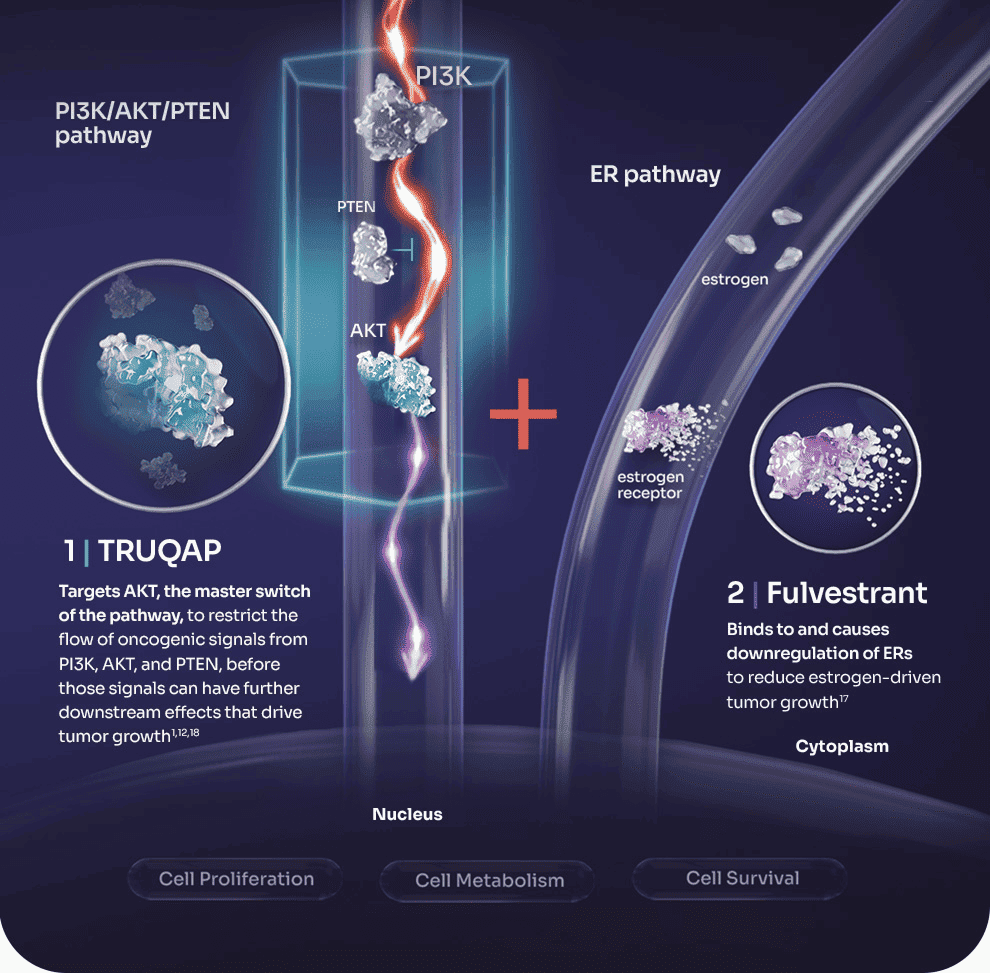
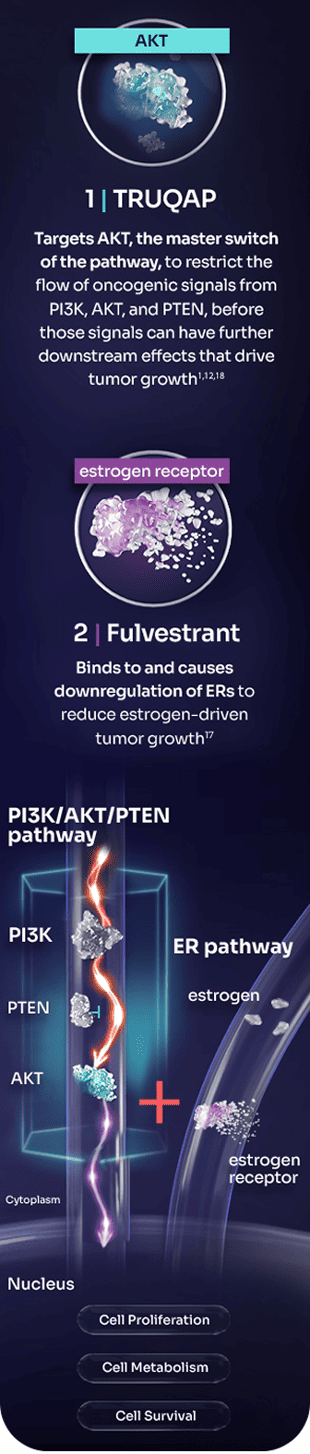
Graphic illustrating the TRUQAP mechanism of action within the PI3K/AKT/PTEN pathway and the fulvestrant mechanism of action within the estrogen receptor pathway. Highlights how TRUQAP works in combination with fulvestrant.
Discover how TRUQAP + fulvestrant work
Learn more about the mechanisms of action for this combination therapy.
This video will describe the mechanisms of action for TRUQAP® (capivasertib) and fulvestrant. Continue watching for Important Safety Information after learning about TRUQAP and fulvestrant.
Mechanisms of resistance and alterations in the PI3K/AKT/PTEN pathway in HR+/HER2– aBC or mBC
During first-line treatment with endocrine therapy plus a CDK4/6 inhibitor, mechanisms of resistance develop to allow cancer cells to escape treatment effects.
The most common treatment resistance pathway responsible for driving disease progression is the PI3K/AKT/PTEN pathway.
Mechanisms of resistance, like PIK3CA- and AKT1-activating mutations and PTEN loss of function alterations, can cause amplified signaling, resulting in uncontrolled tumor growth.
These alterations are present in up to 50% of patients with breast cancer, and, most notably, PIK3CA-activating mutations are associated with poor prognosis.
The estrogen receptor pathway can also fuel tumor growth independent of the PI3K/AKT/PTEN pathway, making it critical to use treatment strategies that target both pathways.
How TRUQAP and fulvestrant work
TRUQAP inhibits amplified signaling from PIK3CA- and AKT1-activating mutations, and PTEN loss of function alterations, by targeting AKT, the master switch of the pathway. This mechanism of action restricts the flow of amplified signals before they can have further downstream effects that drive tumor growth.
Fulvestrant binds to and causes downregulation of estrogen receptors to reduce estrogen-driven tumor growth. TRUQAP plus fulvestrant leverages the dual power of AKT inhibition and ER downregulation to reduce tumor growth with the goal of extending time on endocrine therapy. Test for PIK3CA, AKT1, and PTEN alterations. Treat with TRUQAP plus fulvestrant in second line.
Select Safety Information About TRUQAP® (capivasertib) tablets
TRUQAP is contraindicated in patients with severe hypersensitivity to TRUQAP or any of its components.
Serious adverse reactions include hyperglycemia, including diabetic ketoacidosis and fatal outcomes; diarrhea; and cutaneous adverse reactions. Monitor fasting glucose and hemoglobin A1C levels regularly. May cause fetal harm when administered to a pregnant woman. Among the 355 patients who received TRUQAP in CAPItello-291, the most common (≥20%) adverse reactions, including laboratory abnormalities, were diarrhea (72%), cutaneous adverse reactions (58%), increased random glucose (57%), decreased lymphocytes (47%), decreased hemoglobin (45%), increased fasting glucose (37%), nausea and fatigue (35% each), decreased leukocytes (32%), increased triglycerides (27%), decreased neutrophils (23%), increased creatinine (22%), vomiting (21%), and stomatitis (20%).
Indication and Usage
TRUQAP in combination with fulvestrant is indicated for the treatment of adult patients with hormone receptor (HR)-positive, human epidermal growth factor receptor 2 (HER2)-negative locally advanced or metastatic breast cancer with one or more PIK3CA/AKT1/PTEN alteration as detected by an FDA-authorized test following progression on at least one endocrine-based regimen in the metastatic setting or recurrence on or within 12 months of completing adjuvant therapy.
Please see full Prescribing Information, including Patient Information for TRUQAP.
You are encouraged to report negative side effects of AstraZeneca prescription drugs by calling 1-800-236-9933. If you prefer to report these to the FDA, call 1-800-FDA-1088.
Explore the pathway
Dive into TRUQAP data

IMPORTANT SAFETY INFORMATION ABOUT TRUQAP® (capivasertib) tablets
TRUQAP is contraindicated in patients with severe hypersensitivity to TRUQAP or any of its components.
Hyperglycemia
TRUQAP can cause severe hyperglycemia, including diabetic ketoacidosis and fatal outcomes
Metastatic HR-Positive, HER2-Negative Breast Cancer
PTEN-Deficient Metastatic Androgen Pathway Modulation-Naïve or -Sensitive Prostate Cancer
The safety of TRUQAP has not been established in patients with Type 1 diabetes or Type 2 diabetes that is uncontrolled or requiring insulin at baseline as these patients were excluded from clinical studies. Before initiating treatment with TRUQAP, test fasting glucose levels (FPG or FBG), HbA1C levels, and optimize fasting glucose. After initiating treatment with TRUQAP, monitor or self-monitor FG levels on Day 3 or 4 of the dosing week during weeks 1, 2, 4, 6, and 8; then monthly while on treatment with TRUQAP; and as clinically indicated. Monitor HbA1C levels every 3 months during treatment with TRUQAP and as clinically indicated. Patients with a history of well-controlled Type 2 diabetes mellitus may require intensified anti-hyperglycemic treatment and close monitoring of FG levels.
For patients who experience hyperglycemia during treatment with TRUQAP, monitor FG at least twice weekly, on days on and off TRUQAP, until FG decreases to baseline levels. During treatment with anti-diabetic medications, monitor FG at least once a week for 2 months, followed by once every 2 weeks, or as clinically indicated. Consider consultation with a healthcare practitioner with expertise in the treatment of hyperglycemia and initiation of FG monitoring at home for patients who have risk factors for hyperglycemia or who experience hyperglycemia. Advise patients on the signs and symptoms of hyperglycemia and counsel patients on lifestyle changes.
Withhold TRUQAP immediately when ketoacidosis is suspected. If ketoacidosis is confirmed, permanently discontinue TRUQAP. Withhold TRUQAP in clinical situations known to increase the risk of severe hyperglycemia or ketoacidosis (eg, suspected serious infection or acute illness). Based on the severity of hyperglycemia, withhold, reduce dose, or permanently discontinue TRUQAP.
Diarrhea
TRUQAP can cause severe diarrhea associated with dehydration
Metastatic HR-Positive, HER2-Negative Breast Cancer
PTEN-Deficient Metastatic Androgen Pathway Modulation-Naïve or -Sensitive Prostate Cancer
Monitor patients for signs and symptoms of diarrhea. Advise patients to increase oral fluids and start anti-diarrheal treatment at the first sign of diarrhea while taking TRUQAP. Withhold, reduce dose, or permanently discontinue TRUQAP based on severity.
Cutaneous Adverse Reactions
TRUQAP can cause cutaneous adverse reactions, which can be severe, including erythema multiforme (EM), palmar-plantar erythrodysesthesia (PPE), and drug reaction with eosinophilia and systemic symptoms (DRESS).
Metastatic HR-Positive, HER2-Negative Breast Cancer
PTEN-Deficient Metastatic Androgen Pathway Modulation-Naïve or -Sensitive Prostate Cancer
Monitor patients for signs and symptoms of cutaneous adverse reactions. Early consultation with a dermatologist is recommended. Withhold, reduce dose, or permanently discontinue TRUQAP based on severity.
Embryo-Fetal Toxicity
Based on findings from animals and mechanism of action, TRUQAP can cause fetal harm when administered to a pregnant woman. Advise pregnant women and females of reproductive potential of the potential risk to a fetus. Advise females of reproductive potential to use effective contraception during treatment with TRUQAP and for
1 month after the last dose.
Advise male patients with female partners of reproductive potential to use effective contraception during treatment with TRUQAP and for 4 months after the last dose.
TRUQAP is used in combination with fulvestrant or abiraterone. Refer to the full Prescribing Information of fulvestrant or abiraterone for pregnancy and contraception information.
ADVERSE REACTIONS
Metastatic HR-Positive, HER2-Negative Breast Cancer
PTEN-Deficient Metastatic Androgen Pathway Modulation-Naïve or -Sensitive Prostate Cancer
DRUG INTERACTIONS
Strong CYP3A Inhibitors: Avoid concomitant use with a strong CYP3A inhibitor. If concomitant use cannot be avoided, reduce the dose of TRUQAP and monitor patients for adverse reactions.
Moderate CYP3A Inhibitors: When concomitantly used with a moderate CYP3A inhibitor, reduce the dose of TRUQAP and monitor patients for adverse reactions.
Strong or Moderate CYP3A Inducers: Avoid concomitant use of TRUQAP with strong or moderate CYP3A inducers.
INDICATIONS AND USAGE
Please see full Prescribing Information, including Patient Information for TRUQAP.
You may report side effects related
to AstraZeneca products .
.
INDICATIONS AND USAGE
IMPORTANT SAFETY INFORMATION ABOUT TRUQAP™ (capivasertib) tablets
Expand