

rPFS
In combination with abiraterone/prednisone,
TRUQAP improved median rPFS by ~8 months vs abi/pred in PTEN-deficient mAPMN/S prostate cancer1
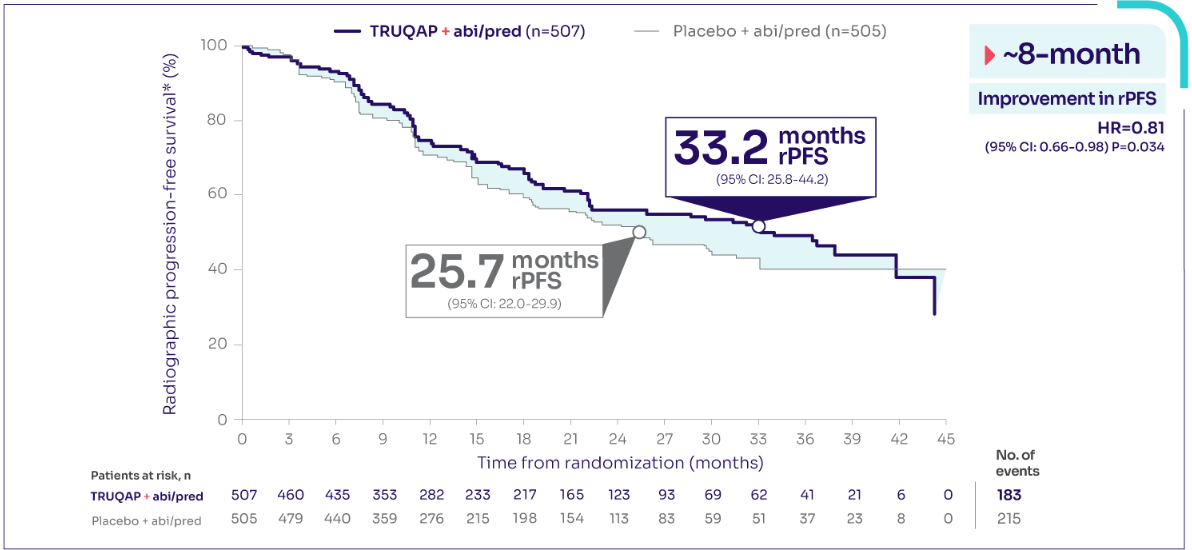
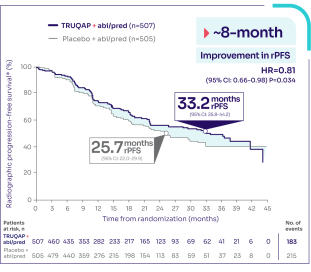
TRUQAP® (capivasertib) + abi/pred demonstrated a statistically significant improvement in rPFS vs abi/pred
*Investigator-assessed rPFS.
Kaplan-Meier curve depicting TRUQAP efficacy in combination with abi/pred from CAPItello-281. Median rPFS was 33.2 months with TRUQAP + abi/pred (n=507; 95% CI: 25.8-44.2) vs 25.7 months with placebo + abi/pred (n=505; 95% CI: 22.0-29.9). HR is 0.81 (95% CI: 0.66-0.98; P=0.034).1
NCCN
CATEGORY 1 PREFERRED
NCCN Clinical Practice Guidelines in Oncology (NCCN Guidelines®) for Breast Cancer recommends capivasertib (TRUQAP®) + fulvestrant as a Category 1 Preferred treatment option for HR+/HER2- aBC or mBC with at least one or more PIK3CA or AKT1 activating mutations or PTEN alterations following progression after one or more prior lines of ET, including one line containing a CDK4/6i2
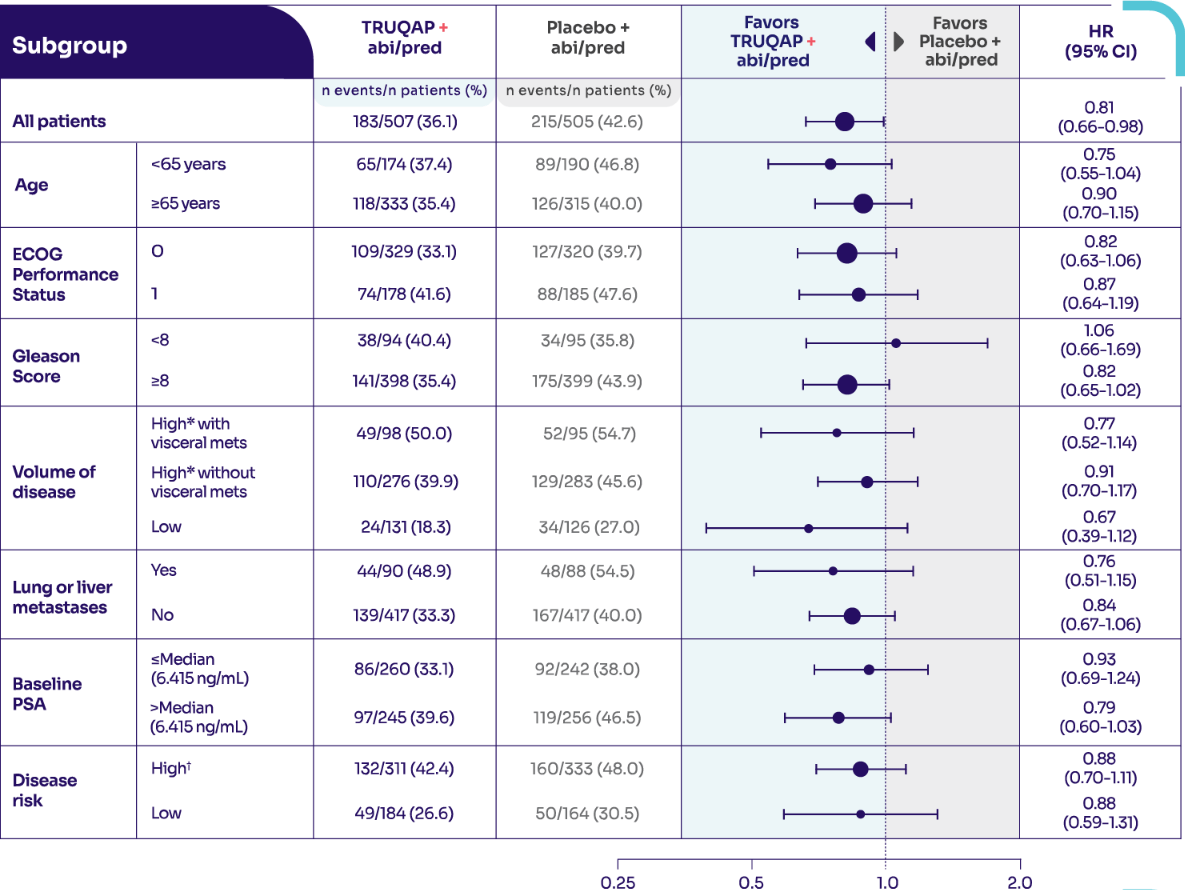
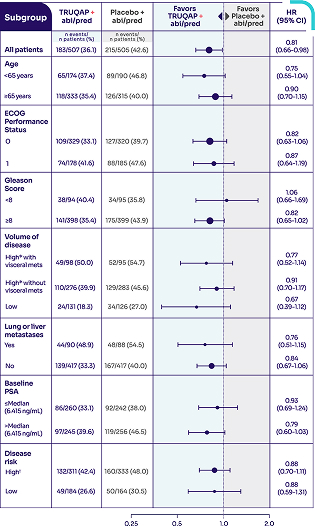
TRUQAP + abi/pred demonstrated consistent results in rPFS across a majority of patient subgroups2
Exploratory analysis of prespecified subgroups. Study was not powered to show statistical significance.
*High metastatic volume of disease is defined as the presence of visceral metastasis and/or 4 or more bone lesions with 1 or more beyond the vertebral bodies and pelvis using CT or MRI for soft tissue and bone scan for bone lesions.2
†High risk is defined in this study as having at least 2 of the following 3 factors: a Gleason Score of ≥8, 4 or more bone lesions, and the presence of measurable visceral metastasis.2
Forest plot of subgroup analysis comparing TRUQAP + abi/pred to placebo + abi/pred in the CAPItello-281 trial. Subgroups analyzed include all patients with PTEN-deficient mAPMN/S prostate cancer, age (<65 years, ≥65 years), ECOG Performance Status (0, 1), Gleason Score (<8, ≥8), volume of disease (high-volume with visceral mets, high-volume without visceral mets, low-volume), lung or liver metastases, baseline PSA (≤median [6.415 ng/mL], >median [6.415 ng/mL]), and disease risk (high risk, low risk).2
Overall Survival
In combination with abiraterone /prednisone,
Overall survival at 26% maturity1
Overall survival data for TRUQAP + abi/pred were immature at the time of the rPFS analysis
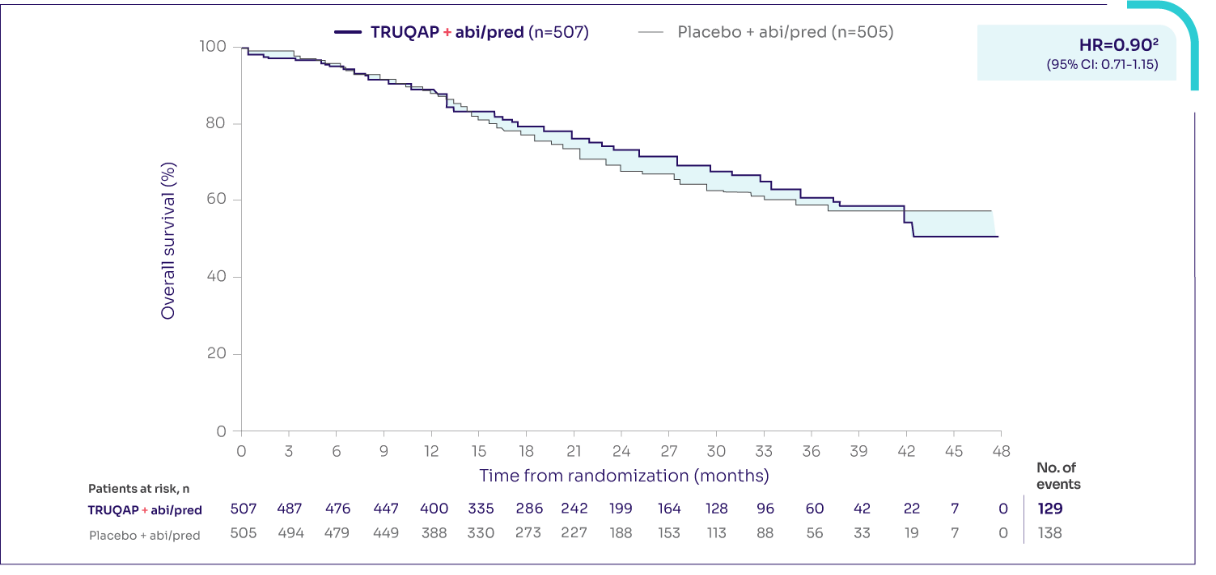
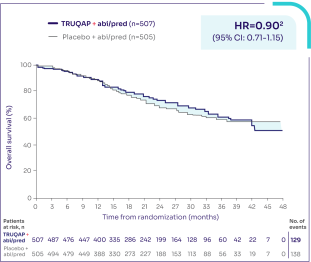
Kaplan-Meier curve showing overall survival in patients with mAPMN/S prostate cancer and PTEN-deficient tumors, comparing TRUQAP + abi/pred with placebo + abi/pred over 48 months from randomization. HR is 0.90 (95% CI: 0.71-1.15).2
At the time of data cutoff, a sufficient number of events had not been reached to yield an overall survival rate2
The OS results are not yet mature and conclusions cannot be made1
Additional secondary endpoints for TRUQAP + abi/pred2
| Secondary endpoints | TRUQAP + abi/pred (n=507) |
TRUQAP + abi/pred (n=507) |
Placebo + abi/pred (n=505) |
Placebo + abi/pred (n=505) |
HR (95% CI) |
|---|---|---|---|---|---|
| Median time to castration resistance |
n events (%) 185 (36.5) |
months 29.5 |
n events (%) 231 (45.7) |
months 22.0 |
0.77 (0.63–0.94) |
| Skeletal events | 150 (29.6) |
42.5 | 176 (34.9) |
37.3 | 0.82 (0.66-1.02) |
| Secondary endpoints |
TRUQAP + abi/ pred (n=507) |
Placebo + abi/ pred (n=505) |
|---|---|---|
| n events (%) | ||
| Median time to castration resistance | 185 (36.5) |
231 (45.7) |
| Skeletal events | 150 (29.6) |
176 (34.9) |
| Secondary endpoints |
TRUQAP + abi/ pred (n=507) |
Placebo + abi/ pred (n=505) |
| months | ||
| Median time to castration resistance | 29.5 | 22.0 |
| Skeletal events | 42.5 | 37.3 |
| Secondary endpoints |
HR (95% CI) | |
| Median time to castration resistance | 0.77 (0.63–0.94) |
|
| Skeletal events | 0.82 (0.66–1.02) |
|
Time to castration resistance: Time from randomization to the first castration-resistant event (radiographic disease progression, PSA progression, or SSE), whichever occurs first, at castrate levels of testosterone (below 50 ng/dL).2
Skeletal events defined as any of the following: Use of radiation therapy to prevent or relieve skeletal symptoms; occurrence of new symptomatic pathological bone fractures (vertebral or non-vertebral), radiologic documentation is required; a pathological fracture, as determined by investigator, is defined as associated with low or no trauma and deemed to have occurred at a site of bone metastasis; occurrence of spinal cord compression, radiologic documentation is required; orthopedic surgical intervention for bone metastasis.2
Secondary endpoints cannot be formally tested until OS reaches statistical significance.2
Exploratory PTEN Subgroup Data
In CAPItello-281,
Exploratory post hoc analysis of PTEN-deficient subgroups2
rPFS in patients by PTEN cutoff
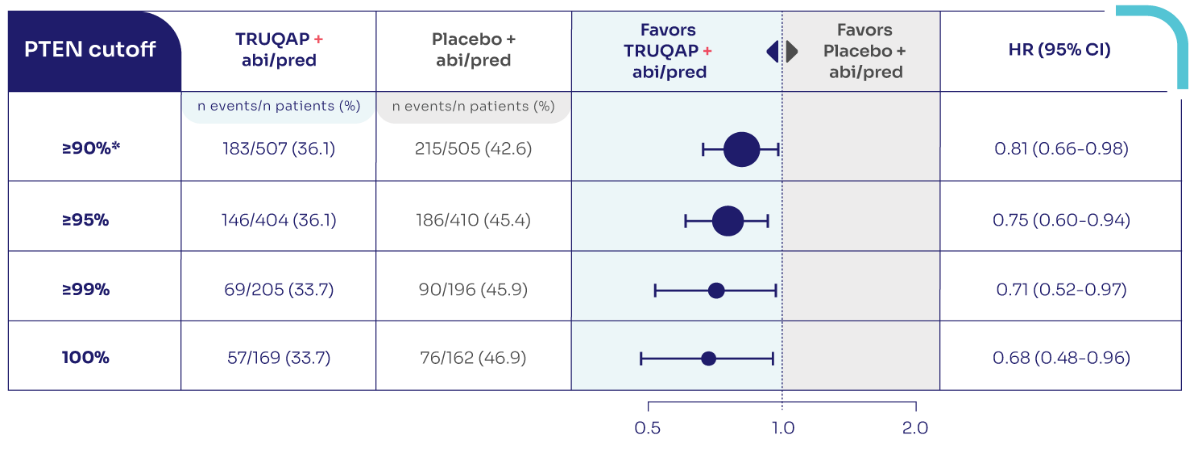
The exploratory post hoc analyses detailed above are descriptive only. CAPItello-281 was not designed to assess statistical significance in subgroup analyses. Results should be interpreted with caution.2
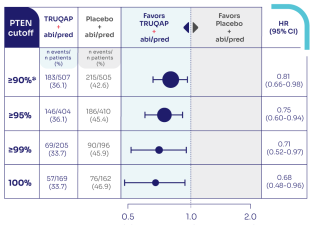
Forest plot of subgroup analysis comparing rPFS with TRUQAP + abi/pred and placebo + abi/pred by PTEN cutoff level in the CAPItello-281 trial. Subgroups analyzed include patients with PTEN-deficient mAPMN/S prostate cancer with no PTEN staining in ≥90%* of cells, ≥95% of cells, ≥99% of cells, and 100% of cells.2
rPFS in patients with PTEN cutoffs of ≥90%,* ≥95%, ≥99%, and 100%2
≥90%*
≥95%
≥99%
100%
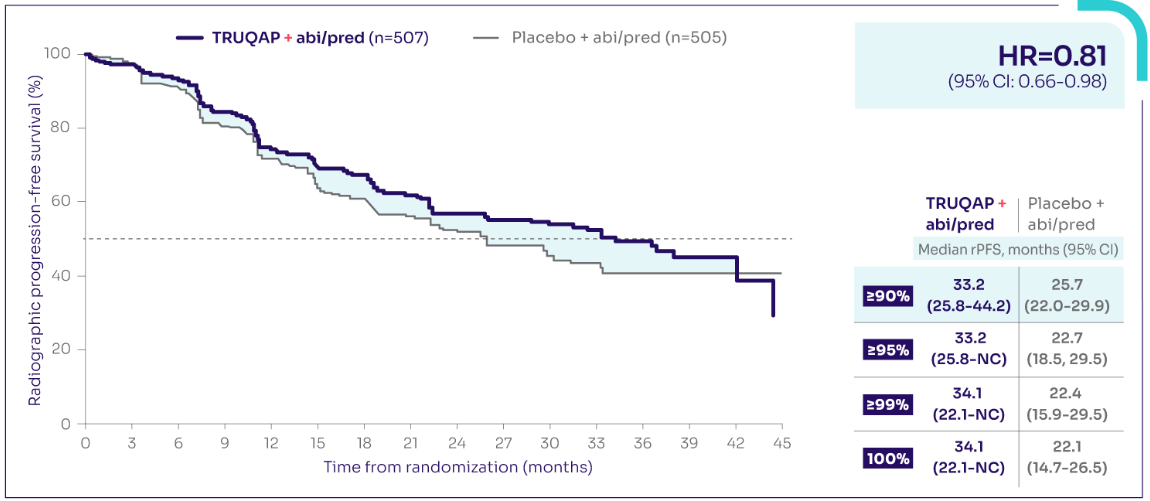
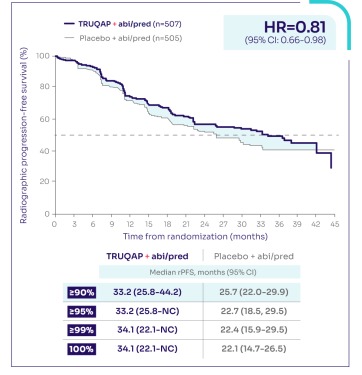
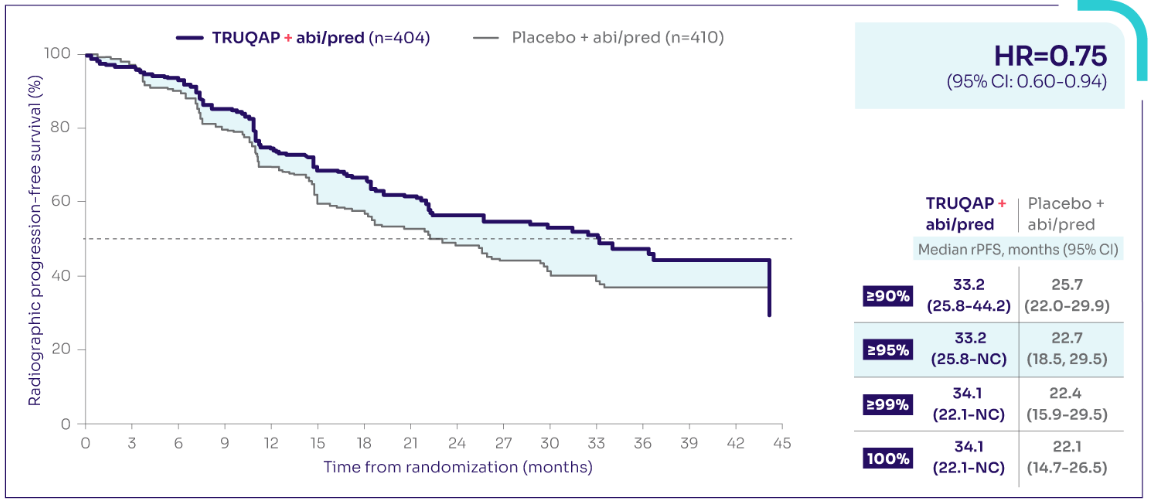
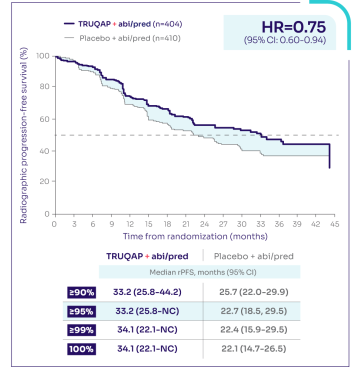
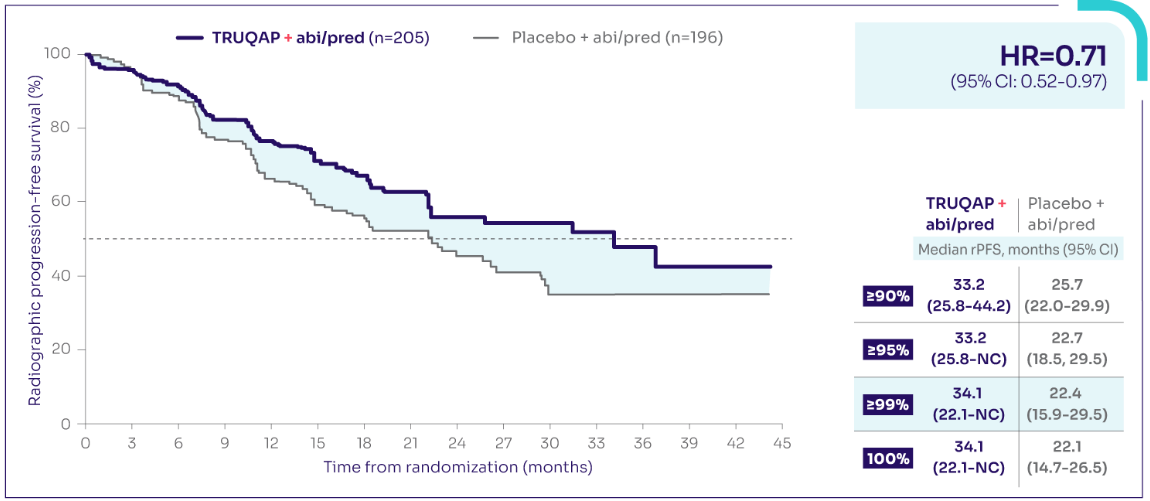
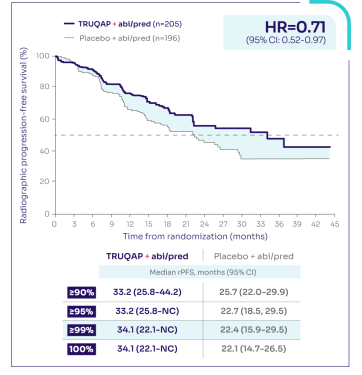
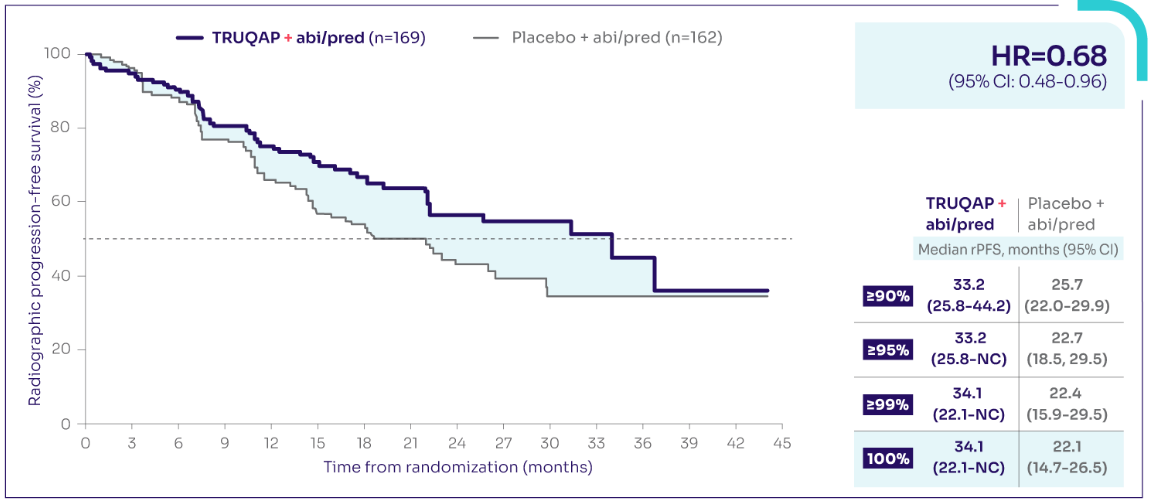
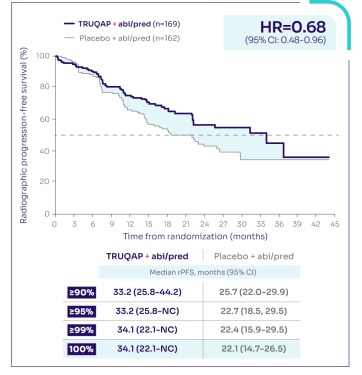
Four Kaplan-Meier curves comparing the median rPFS with TRUQAP + abi/pred vs placebo + abi/pred at different PTEN cutoff levels. Subgroups analyzed include patients with PTEN-deficient mAPMN/S prostate cancer with no PTEN staining in ≥90%, ≥95%, ≥99%, and 100% of cells.2
Exploratory post hoc analyses are descriptive only. CAPItello-281 was not designed to assess statistical significance in subgroup analyses. Results should be interpreted with caution.2
Patients with PTEN-deficient mAPMN/S prostate cancer need a targeted treatment approach3
*All randomized patients in CAPItello-281.2
Trial Design
In CAPItello-281,
TRUQAP + abi/pred was compared with abi/pred1
CAPItello-281: A global, multicenter, randomized, double-blind, phase 3 trial (N=1,012)1,2
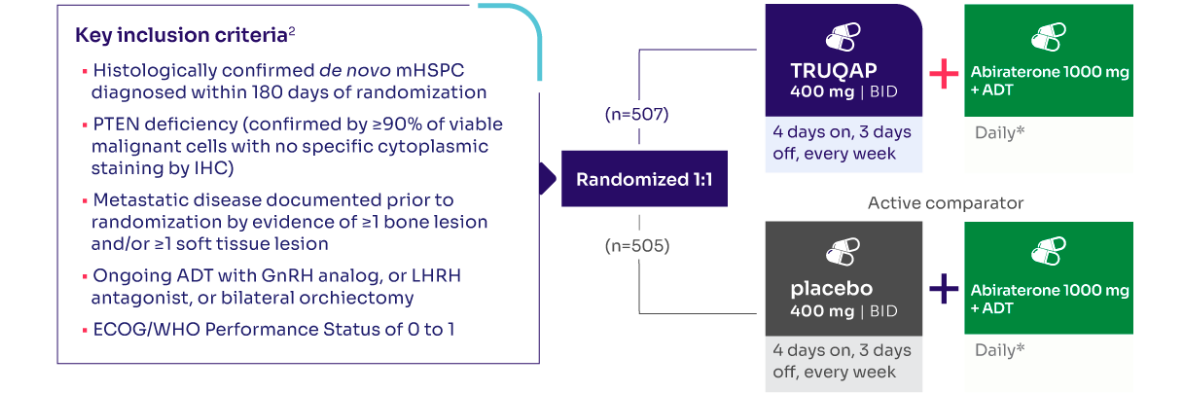
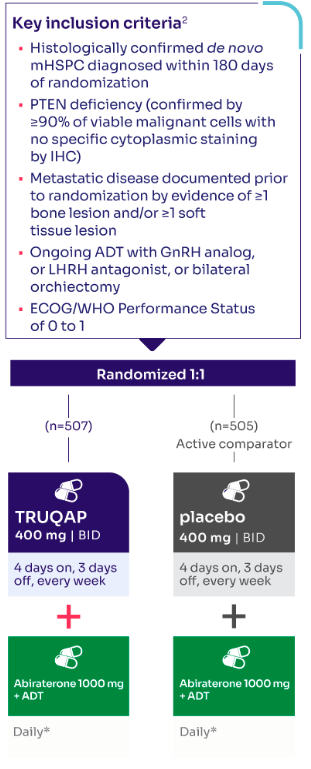
Graphic illustrating the design of the CAPItello-281 trial of TRUQAP in combination with abiraterone and prednisone for patients with de novo PTEN-deficient mHSPC.2
In the trial, 507 patients received 400 mg of TRUQAP and 505 patients received 400 mg of placebo, given orally twice daily for 4 days followed by 3 days off each week. All patients received abiraterone 1000 mg once daily, which includes 5 mg prednisone or prednisolone once daily as well, in addition to androgen deprivation therapy.1,2
Primary endpoint1
- Radiographic progression-free survival (rPFS)
Secondary endpoints1,2
- Overall survival (OS)
- Time to castration resistance
- Skeletal events
Exploratory post hoc analysis2
- PTEN deficiency subgroups
*Abiraterone dosing includes 5 mg of prednisone/prednisolone once daily.1
Baseline Characteristics
Baseline characteristics were balanced between treatment arms in CAPItello-2812
In patients with PTEN-deficient tumors
| Baseline characteri-stics2 | TRUQAP + abi/pred (n=507) | Placebo + abi/pred (n=505) |
|---|---|---|
| Median age, years (range) | 67 (42–87)
|
68 (43–88)
|
| Race, n (%) | ||
| White | 266 (52.5)
|
259 (51.3)
|
| Asian | 186 (36.7)
|
189 (37.4)
|
| Black or African American | 6 (1.2)
|
6 (1.2)
|
| Other | 23 (4.5)
|
25 (5.0)
|
| Unknown | 26 (5.1)
|
26 (5.1)
|
| ECOG Performance Status, n (%) | ||
| 0 | 329 (64.9)
|
320 (63.4)
|
| 1 | 178 (35.1)
|
185 (36.6)
|
| Gleason Score, n (%) | ||
| <8 | 94 (18.5)
|
95 (18.8)
|
| ≥8 | 398 (78.5)
|
399 (79.0)
|
| Unknown | 15 (3.0)
|
11 (2.2)
|
| Volume of disease, n (%) | ||
| High* with visceral mets | 98 (19.3)
|
95 (18.8)
|
| High* without visceral mets | 276 (54.4)
|
283 (56.0)
|
| Low | 131 (25.8)
|
126 (25.0)
|
| Unknown | 2 (0.4)
|
1 (0.2)
|
| Liver or lung metastases, n (%) | ||
| Yes | 90 (17.8)
|
88 (17.4)
|
| No | 417 (82.2)
|
417 (82.6)
|
| Baseline PSA, n (%) | ||
| ≤Median at baseline (6.415 ng/mL) | 260 (51.3)
|
242 (47.9)
|
| >Median at baseline (6.415 ng/mL) | 245 (48.3)
|
256 (50.7)
|
| Unknown | 2 (0.4)
|
7 (1.4)
|
| Disease risk, n (%) | ||
| High† | 311 (61.3)
|
333 (65.9)
|
| Low | 184 (36.3)
|
164 (32.5)
|
| Unknown | 12 (2.4)
|
8 (1.6)
|
Patients exhibited a range of disease volumes and risk levels2
*High metastatic volume of disease is defined as the presence of visceral metastasis and/or 4 or more bone lesions with 1 or more beyond the vertebral bodies and pelvis using CT or MRI for soft tissue and bone scan for bone lesions.2
†High risk is defined in this study as having at least 2 of the following 3 factors: a Gleason Score of ≥8, 4 or more bone lesions, and the presence of measurable visceral metastasis.2
Discover the TRUQAP mechanism of action
See the mechanism of actionExplore the TRUQAP safety profile
Explore safety dataabi=abiraterone; ADT=androgen deprivation therapy; BID=bis in die (twice daily); CT=computed tomography; ECOG=Eastern Cooperative Oncology Group; GnRH=gonadotropin-releasing hormone; HR=hazard ratio; IHC=immunohistochemistry; LHRH=luteinizing hormone-releasing hormone; mets=metastases; mAPMN/S=metastatic androgen pathway modulation-naïve/sensitive; mHSPC=metastatic hormone-sensitive prostate cancer; MRI=magnetic resonance imaging; NC=not calculable; Pred=prednisone; PSA=prostate-specific antigen; PTEN=phosphatase and tensin homolog; SSE=symptomatic skeletal event; WHO=World Health Organization.
References: 1. TRUQAP® (capivasertib) [prescribing information]. Wilmington, DE: AstraZeneca Pharmaceuticals LP; 2026. 2. Fizazi K, Clarke NW, De Santis M, et al. Capivasertib plus abiraterone in PTEN-deficient metastatic hormone-sensitive prostate cancer: CAPItello-281 phase III study. Ann Oncol. 2026;37(1):53-68. doi:10.1016/j.annonc.2025.10.004 [including the Supplementary Appendix] 3. Jamaspishvili T, Berman DM, Ross AE, et al. Clinical implications of PTEN loss in prostate cancer. Nat Rev Urol. 2018;15(4):222-234. doi:10.1038/nrurol.2018.9

See Full Indications
Plus
IMPORTANT SAFETY INFORMATION ABOUT TRUQAP® (capivasertib) tablets
IMPORTANT SAFETY INFORMATION ABOUT TRUQAP® (capivasertib) tablets
TRUQAP is contraindicated in patients with severe hypersensitivity to TRUQAP or any of its components.
Hyperglycemia
TRUQAP can cause severe hyperglycemia, including diabetic ketoacidosis and fatal outcomes
Metastatic HR-Positive, HER2-Negative Breast Cancer
- In CAPItello-291, increased fasting glucose (FG) from baseline occurred in 37% of patients treated with TRUQAP, including 11% of patients with Grade 2 (FG >160 to 250 mg/dL), 2% with Grade 3 (FG >250 to 500 mg/dL), and 1.1% with Grade 4 (FG >500 mg/dL) events
- The median time to first occurrence of hyperglycemia was 15 days (range: 1 to 367). Dose reduction for hyperglycemia was required in 0.6% of patients and permanent discontinuation was required in 0.6% of patients. Diabetic metabolic decompensation occurred in 0.6% of patients, including diabetic ketoacidosis in 0.3%
- In the study, 12% (43/355) of patients who received TRUQAP had an anti-hyperglycemic medication regimen either initiated or changed, including treatment with insulin in 4.8% (17/355) of patients
PTEN-Deficient Metastatic Androgen Pathway Modulation-Naïve or -Sensitive Prostate Cancer
- In CAPItello-281, increased fasting glucose (FG) from baseline occurred in 69% of patients treated with TRUQAP, including 25% of patients with Grade 2 (FG >160 to 250 mg/dL), 12% with Grade 3 (FG >250 to 500 mg/dL), and 1.2% of patients with Grade 4 (FG >500 mg/dL) events
- The median time to first occurrence of hyperglycemia was 71 days (range: 1 to 1454). Dose reduction for hyperglycemia was required in 8.7% of patients and permanent discontinuation was required in 2.4% of patients. Diabetic ketoacidosis occurred in 1.2% of patients
- In the study, 41% (204/503) of patients who received TRUQAP had an anti-hyperglycemic medication regimen either initiated or changed, including treatment with insulin in 16% (81/503) of patients
The safety of TRUQAP has not been established in patients with Type 1 diabetes or Type 2 diabetes that is uncontrolled or requiring insulin at baseline as these patients were excluded from clinical studies. Before initiating treatment with TRUQAP, test fasting glucose levels (FPG or FBG), HbA1C levels, and optimize fasting glucose. After initiating treatment with TRUQAP, monitor or self-monitor FG levels on Day 3 or 4 of the dosing week during weeks 1, 2, 4, 6, and 8; then monthly while on treatment with TRUQAP; and as clinically indicated. Monitor HbA1C levels every 3 months during treatment with TRUQAP and as clinically indicated. Patients with a history of well-controlled Type 2 diabetes mellitus may require intensified anti-hyperglycemic treatment and close monitoring of FG levels.
For patients who experience hyperglycemia during treatment with TRUQAP, monitor FG at least twice weekly, on days on and off TRUQAP, until FG decreases to baseline levels. During treatment with anti-diabetic medications, monitor FG at least once a week for 2 months, followed by once every 2 weeks, or as clinically indicated. Consider consultation with a healthcare practitioner with expertise in the treatment of hyperglycemia and initiation of FG monitoring at home for patients who have risk factors for hyperglycemia or who experience hyperglycemia. Advise patients on the signs and symptoms of hyperglycemia and counsel patients on lifestyle changes.
Withhold TRUQAP immediately when ketoacidosis is suspected. If ketoacidosis is confirmed, permanently discontinue TRUQAP. Withhold TRUQAP in clinical situations known to increase the risk of severe hyperglycemia or ketoacidosis (eg, suspected serious infection or acute illness). Based on the severity of hyperglycemia, withhold, reduce dose, or permanently discontinue TRUQAP.
Diarrhea
TRUQAP can cause severe diarrhea associated with dehydration
Metastatic HR-Positive, HER2-Negative Breast Cancer
- In CAPItello-291, diarrhea occurred in 72% of patients. Grade 3 or 4 diarrhea occurred in 9% of patients
- The median time to first occurrence was 8 days (range: 1 to 519). In the study, dose reductions were required in 8% of patients, and 2% of patients permanently discontinued TRUQAP due to diarrhea. In patients with Grade ≥2 diarrhea (n=93) with at least 1 grade improvement (n=89), median time to improvement from the first event was 4 days (range: 1 to 154)
- In the 257 patients with diarrhea, 59% required anti-diarrheal medications to manage symptoms
PTEN-Deficient Metastatic Androgen Pathway Modulation-Naïve or -Sensitive Prostate Cancer
- In CAPItello‑281, diarrhea of any grade occurred in 264 (52%) patients. Grade 3 occurred in 31 (6%) patients and Grade 4 occurred in 1 (0.2%) patient
- The median time to first occurrence was 12 days (range: 3 to 48). In the study, dose reductions were required in 26 (5%) patients and 6 (1.2%) patients discontinued TRUQAP due to diarrhea
- In the 264 patients with diarrhea, anti-diarrheal medication was required in 64% (170/264) of patients to manage diarrhea symptoms
Monitor patients for signs and symptoms of diarrhea. Advise patients to increase oral fluids and start anti-diarrheal treatment at the first sign of diarrhea while taking TRUQAP. Withhold, reduce dose, or permanently discontinue TRUQAP based on severity.
Cutaneous Adverse Reactions
TRUQAP can cause cutaneous adverse reactions, which can be severe, including erythema multiforme (EM), palmar-plantar erythrodysesthesia (PPE), and drug reaction with eosinophilia and systemic symptoms (DRESS).
Metastatic HR-Positive, HER2-Negative Breast Cancer
- In CAPItello-291, cutaneous adverse reactions occurred in 58% of patients. Grade 3 or 4 cutaneous adverse reactions occurred in 17% of patients receiving TRUQAP. EM occurred in 1.7% of patients, and DRESS occurred in 0.3% of patients
- The median time to onset of cutaneous adverse reactions was 13 days (range: 1 to 575 days). Dose reduction was required in 7% of patients and 7% of patients permanently discontinued TRUQAP due to cutaneous adverse reactions
- Among the 204 patients with cutaneous adverse reactions, 44% (90/204) required corticosteroid treatment. Of these, 37% (76/204) were treated with topical corticosteroids and 19% (39/204) with systemic corticosteroids. In patients with Grade ≥2 cutaneous adverse reaction (n=116) with at least 1 grade improvement (n=104), median time to improvement from the first event was 12 days (range: 2 to 544)
PTEN-Deficient Metastatic Androgen Pathway Modulation-Naïve or -Sensitive Prostate Cancer
- In CAPItello-281, cutaneous adverse reactions occurred in 53% of patients. Grade 3 cutaneous adverse reactions occurred in 84 (17%) patients and Grade 4 occurred in 1 (0.2%) patients
- The median time to onset of rash was 13 days (range: 11 to 63 days). In the study, dose reduction was required in 58 (12%) patients and 38 (8%) patients discontinued TRUQAP due to rash
- Among the 265 patients with cutaneous adverse reactions, 80% (212/265) required treatment and 91% (242/265) recovered in the study. Of these, 54% (115/212) were treated with topical corticosteroids and 25% (54/212) with systemic corticosteroids
Monitor patients for signs and symptoms of cutaneous adverse reactions. Early consultation with a dermatologist is recommended. Withhold, reduce dose, or permanently discontinue TRUQAP based on severity.
Embryo-Fetal Toxicity
Based on findings from animals and mechanism of action, TRUQAP can cause fetal harm when administered to a pregnant woman. Advise pregnant women and females of reproductive potential of the potential risk to a fetus. Advise females of reproductive potential to use effective contraception during treatment with TRUQAP and for 1 month after the last dose.
Advise male patients with female partners of reproductive potential to use effective contraception during treatment with TRUQAP and for 4 months after the last dose.
TRUQAP is used in combination with fulvestrant or abiraterone. Refer to the full Prescribing Information of fulvestrant or abiraterone for pregnancy and contraception information.
ADVERSE REACTIONS
Metastatic HR-Positive, HER2-Negative Breast Cancer
- Among the 355 patients who received TRUQAP in CAPItello-291, the most common (≥20%) adverse reactions, including laboratory abnormalities, were diarrhea (72%), cutaneous adverse reactions (58%), increased random glucose (57%), decreased lymphocytes (47%), decreased hemoglobin (45%), increased fasting glucose (37%), nausea and fatigue (35% each), decreased leukocytes (32%), increased triglycerides (27%), decreased neutrophils (23%), increased creatinine (22%), vomiting (21%), and stomatitis (20%)
- In the 155 patients with PIK3CA/AKT1/PTEN alterations treated with TRUQAP + fulvestrant, dose reductions due to adverse reactions were reported in 21% of patients. Permanent TRUQAP discontinuation due to an adverse reaction occurred in 10% of patients. Dose interruptions of TRUQAP occurred in 39% of patients
PTEN-Deficient Metastatic Androgen Pathway Modulation-Naïve or -Sensitive Prostate Cancer
- Among the 503 patients who received TRUQAP in CAPItello-281, the most common (≥20%) adverse reactions including laboratory abnormalities were increased fasting glucose (70%), decreased hemoglobin (61%), decreased lymphocytes (58%), cutaneous adverse reactions (53%), diarrhea (53%), decreased potassium (51%), increased creatinine (49%), increased non-fasting glucose (49%), increased alanine aminotransferase (38%), increased triglycerides (37%), increased aspartate aminotransferase (36%), decreased sodium (30%), and fatigue (26%)
- In the 503 patients treated with TRUQAP + abiraterone and prednisone, dose reductions due to adverse reactions were reported in 32% of patients. Permanent TRUQAP discontinuation due to an adverse reaction occurred in 20% of patients. Dose interruptions of TRUQAP occurred in 65% of patients
DRUG INTERACTIONS
Strong CYP3A Inhibitors: Avoid concomitant use with a strong CYP3A inhibitor. If concomitant use cannot be avoided, reduce the dose of TRUQAP and monitor patients for adverse reactions.
Moderate CYP3A Inhibitors: When concomitantly used with a moderate CYP3A inhibitor, reduce the dose of TRUQAP and monitor patients for adverse reactions.
Strong or Moderate CYP3A Inducers: Avoid concomitant use of TRUQAP with strong or moderate CYP3A inducers.
INDICATIONS AND USAGE
- TRUQAP in combination with fulvestrant is indicated for the treatment of adult patients with hormone receptor (HR)‑positive, human epidermal growth factor receptor 2 (HER2)-negative locally advanced or metastatic breast cancer with one or more PIK3CA/AKT1/PTEN alteration as detected by an FDA-authorized test following progression on at least one endocrine-based regimen in the metastatic setting or recurrence on or within 12 months of completing adjuvant therapy
- TRUQAP in combination with abiraterone and prednisone is indicated for the treatment of adult patients with metastatic androgen pathway modulation-naïve or -sensitive (mAPMN/S) prostate cancer that is PTEN-deficient as detected by an FDA-authorized test
Please see full Prescribing Information, including Patient Information for TRUQAP.
You may report side effects related to AstraZeneca products .
.
IMPORTANT SAFETY INFORMATION
Expand
IMPORTANT SAFETY INFORMATION ABOUT TRUQAP® (capivasertib) tablets
IMPORTANT SAFETY INFORMATION ABOUT TRUQAP® (capivasertib) tablets
TRUQAP is contraindicated in patients with severe hypersensitivity to TRUQAP or any of its components.
Hyperglycemia
TRUQAP can cause severe hyperglycemia, including diabetic ketoacidosis and fatal outcomes
Metastatic HR-Positive, HER2-Negative Breast Cancer
- In CAPItello-291, increased fasting glucose (FG) from baseline occurred in 37% of patients treated with TRUQAP, including 11% of patients with Grade 2 (FG >160 to 250 mg/dL), 2% with Grade 3 (FG >250 to 500 mg/dL), and 1.1% with Grade 4 (FG >500 mg/dL) events
- The median time to first occurrence of hyperglycemia was 15 days (range: 1 to 367). Dose reduction for hyperglycemia was required in 0.6% of patients and permanent discontinuation was required in 0.6% of patients. Diabetic metabolic decompensation occurred in 0.6% of patients, including diabetic ketoacidosis in 0.3%
- In the study, 12% (43/355) of patients who received TRUQAP had an anti-hyperglycemic medication regimen either initiated or changed, including treatment with insulin in 4.8% (17/355) of patients
PTEN-Deficient Metastatic Androgen Pathway Modulation-Naïve or -Sensitive Prostate Cancer
- In CAPItello-281, increased fasting glucose (FG) from baseline occurred in 69% of patients treated with TRUQAP, including 25% of patients with Grade 2 (FG >160 to 250 mg/dL), 12% with Grade 3 (FG >250 to 500 mg/dL), and 1.2% of patients with Grade 4 (FG >500 mg/dL) events
- The median time to first occurrence of hyperglycemia was 71 days (range: 1 to 1454). Dose reduction for hyperglycemia was required in 8.7% of patients and permanent discontinuation was required in 2.4% of patients. Diabetic ketoacidosis occurred in 1.2% of patients
- In the study, 41% (204/503) of patients who received TRUQAP had an anti-hyperglycemic medication regimen either initiated or changed, including treatment with insulin in 16% (81/503) of patients
The safety of TRUQAP has not been established in patients with Type 1 diabetes or Type 2 diabetes that is uncontrolled or requiring insulin at baseline as these patients were excluded from clinical studies. Before initiating treatment with TRUQAP, test fasting glucose levels (FPG or FBG), HbA1C levels, and optimize fasting glucose. After initiating treatment with TRUQAP, monitor or self-monitor FG levels on Day 3 or 4 of the dosing week during weeks 1, 2, 4, 6, and 8; then monthly while on treatment with TRUQAP; and as clinically indicated. Monitor HbA1C levels every 3 months during treatment with TRUQAP and as clinically indicated. Patients with a history of well-controlled Type 2 diabetes mellitus may require intensified anti-hyperglycemic treatment and close monitoring of FG levels.
For patients who experience hyperglycemia during treatment with TRUQAP, monitor FG at least twice weekly, on days on and off TRUQAP, until FG decreases to baseline levels. During treatment with anti-diabetic medications, monitor FG at least once a week for 2 months, followed by once every 2 weeks, or as clinically indicated. Consider consultation with a healthcare practitioner with expertise in the treatment of hyperglycemia and initiation of FG monitoring at home for patients who have risk factors for hyperglycemia or who experience hyperglycemia. Advise patients on the signs and symptoms of hyperglycemia and counsel patients on lifestyle changes.
Withhold TRUQAP immediately when ketoacidosis is suspected. If ketoacidosis is confirmed, permanently discontinue TRUQAP. Withhold TRUQAP in clinical situations known to increase the risk of severe hyperglycemia or ketoacidosis (eg, suspected serious infection or acute illness). Based on the severity of hyperglycemia, withhold, reduce dose, or permanently discontinue TRUQAP.
Diarrhea
TRUQAP can cause severe diarrhea associated with dehydration
Metastatic HR-Positive, HER2-Negative Breast Cancer
- In CAPItello-291, diarrhea occurred in 72% of patients. Grade 3 or 4 diarrhea occurred in 9% of patients
- The median time to first occurrence was 8 days (range: 1 to 519). In the study, dose reductions were required in 8% of patients, and 2% of patients permanently discontinued TRUQAP due to diarrhea. In patients with Grade ≥2 diarrhea (n=93) with at least 1 grade improvement (n=89), median time to improvement from the first event was 4 days (range: 1 to 154)
- In the 257 patients with diarrhea, 59% required anti-diarrheal medications to manage symptoms
PTEN-Deficient Metastatic Androgen Pathway Modulation-Naïve or -Sensitive Prostate Cancer
- In CAPItello‑281, diarrhea of any grade occurred in 264 (52%) patients. Grade 3 occurred in 31 (6%) patients and Grade 4 occurred in 1 (0.2%) patient
- The median time to first occurrence was 12 days (range: 3 to 48). In the study, dose reductions were required in 26 (5%) patients and 6 (1.2%) patients discontinued TRUQAP due to diarrhea
- In the 264 patients with diarrhea, anti-diarrheal medication was required in 64% (170/264) of patients to manage diarrhea symptoms
Monitor patients for signs and symptoms of diarrhea. Advise patients to increase oral fluids and start anti-diarrheal treatment at the first sign of diarrhea while taking TRUQAP. Withhold, reduce dose, or permanently discontinue TRUQAP based on severity.
Cutaneous Adverse Reactions
TRUQAP can cause cutaneous adverse reactions, which can be severe, including erythema multiforme (EM), palmar-plantar erythrodysesthesia (PPE), and drug reaction with eosinophilia and systemic symptoms (DRESS).
Metastatic HR-Positive, HER2-Negative Breast Cancer
- In CAPItello-291, cutaneous adverse reactions occurred in 58% of patients. Grade 3 or 4 cutaneous adverse reactions occurred in 17% of patients receiving TRUQAP. EM occurred in 1.7% of patients, and DRESS occurred in 0.3% of patients
- The median time to onset of cutaneous adverse reactions was 13 days (range: 1 to 575 days). Dose reduction was required in 7% of patients and 7% of patients permanently discontinued TRUQAP due to cutaneous adverse reactions
- Among the 204 patients with cutaneous adverse reactions, 44% (90/204) required corticosteroid treatment. Of these, 37% (76/204) were treated with topical corticosteroids and 19% (39/204) with systemic corticosteroids. In patients with Grade ≥2 cutaneous adverse reaction (n=116) with at least 1 grade improvement (n=104), median time to improvement from the first event was 12 days (range: 2 to 544)
PTEN-Deficient Metastatic Androgen Pathway Modulation-Naïve or -Sensitive Prostate Cancer
- In CAPItello-281, cutaneous adverse reactions occurred in 53% of patients. Grade 3 cutaneous adverse reactions occurred in 84 (17%) patients and Grade 4 occurred in 1 (0.2%) patients
- The median time to onset of rash was 13 days (range: 11 to 63 days). In the study, dose reduction was required in 58 (12%) patients and 38 (8%) patients discontinued TRUQAP due to rash
- Among the 265 patients with cutaneous adverse reactions, 80% (212/265) required treatment and 91% (242/265) recovered in the study. Of these, 54% (115/212) were treated with topical corticosteroids and 25% (54/212) with systemic corticosteroids
Monitor patients for signs and symptoms of cutaneous adverse reactions. Early consultation with a dermatologist is recommended. Withhold, reduce dose, or permanently discontinue TRUQAP based on severity.
Embryo-Fetal Toxicity
Based on findings from animals and mechanism of action, TRUQAP can cause fetal harm when administered to a pregnant woman. Advise pregnant women and females of reproductive potential of the potential risk to a fetus. Advise females of reproductive potential to use effective contraception during treatment with TRUQAP and for 1 month after the last dose.
Advise male patients with female partners of reproductive potential to use effective contraception during treatment with TRUQAP and for 4 months after the last dose.
TRUQAP is used in combination with fulvestrant or abiraterone. Refer to the full Prescribing Information of fulvestrant or abiraterone for pregnancy and contraception information.
ADVERSE REACTIONS
Metastatic HR-Positive, HER2-Negative Breast Cancer
- Among the 355 patients who received TRUQAP in CAPItello-291, the most common (≥20%) adverse reactions, including laboratory abnormalities, were diarrhea (72%), cutaneous adverse reactions (58%), increased random glucose (57%), decreased lymphocytes (47%), decreased hemoglobin (45%), increased fasting glucose (37%), nausea and fatigue (35% each), decreased leukocytes (32%), increased triglycerides (27%), decreased neutrophils (23%), increased creatinine (22%), vomiting (21%), and stomatitis (20%)
- In the 155 patients with PIK3CA/AKT1/PTEN alterations treated with TRUQAP + fulvestrant, dose reductions due to adverse reactions were reported in 21% of patients. Permanent TRUQAP discontinuation due to an adverse reaction occurred in 10% of patients. Dose interruptions of TRUQAP occurred in 39% of patients
PTEN-Deficient Metastatic Androgen Pathway Modulation-Naïve or -Sensitive Prostate Cancer
- Among the 503 patients who received TRUQAP in CAPItello-281, the most common (≥20%) adverse reactions including laboratory abnormalities were increased fasting glucose (70%), decreased hemoglobin (61%), decreased lymphocytes (58%), cutaneous adverse reactions (53%), diarrhea (53%), decreased potassium (51%), increased creatinine (49%), increased non-fasting glucose (49%), increased alanine aminotransferase (38%), increased triglycerides (37%), increased aspartate aminotransferase (36%), decreased sodium (30%), and fatigue (26%)
- In the 503 patients treated with TRUQAP + abiraterone and prednisone, dose reductions due to adverse reactions were reported in 32% of patients. Permanent TRUQAP discontinuation due to an adverse reaction occurred in 20% of patients. Dose interruptions of TRUQAP occurred in 65% of patients
DRUG INTERACTIONS
Strong CYP3A Inhibitors: Avoid concomitant use with a strong CYP3A inhibitor. If concomitant use cannot be avoided, reduce the dose of TRUQAP and monitor patients for adverse reactions.
Moderate CYP3A Inhibitors: When concomitantly used with a moderate CYP3A inhibitor, reduce the dose of TRUQAP and monitor patients for adverse reactions.
Strong or Moderate CYP3A Inducers: Avoid concomitant use of TRUQAP with strong or moderate CYP3A inducers.
INDICATIONS AND USAGE
- TRUQAP in combination with fulvestrant is indicated for the treatment of adult patients with hormone receptor (HR)‑positive, human epidermal growth factor receptor 2 (HER2)-negative locally advanced or metastatic breast cancer with one or more PIK3CA/AKT1/PTEN alteration as detected by an FDA-authorized test following progression on at least one endocrine-based regimen in the metastatic setting or recurrence on or within 12 months of completing adjuvant therapy
- TRUQAP in combination with abiraterone and prednisone is indicated for the treatment of adult patients with metastatic androgen pathway modulation-naïve or -sensitive (mAPMN/S) prostate cancer that is PTEN-deficient as detected by an FDA-authorized test
Please see full Prescribing Information, including Patient Information for TRUQAP.
You may report side effects related to AstraZeneca products.