

Dosing Schedule
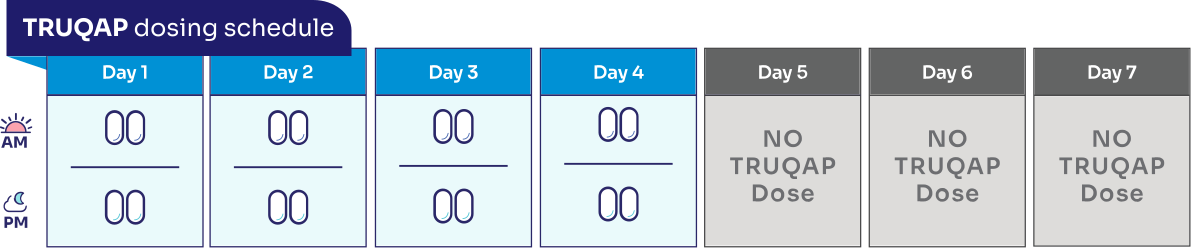
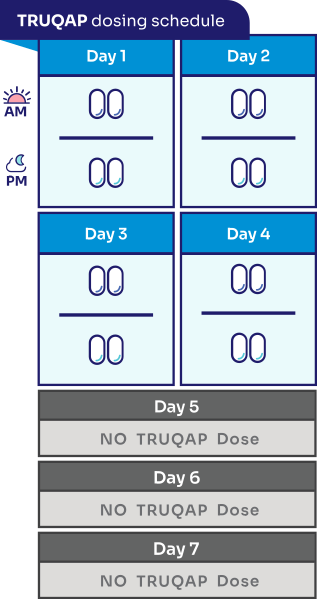
Benefit-risk balance achieved with 4 days on, 3 days off, every week1
Designed to achieve a positive benefit–risk balance in patients with PTEN-deficient mAPMN/S prostate cancer
The recommended starting dose of TRUQAP® (capivasertib) is 400 mg taken orally twice daily, approximately 12 hours apart, 4 consecutive days on, 3 days off, every week
Select patients based on an FDA-authorized test for detection of PTEN deficiency.
TRUQAP is taken in combination with other agents

Abiraterone
1000 mg taken orally, once daily

Prednisone
5 mg, once daily

ADT therapy*
For dosing instructions for combination agents administered with TRUQAP, refer to the respective manufacturers’ Prescribing Information.
*Patients with mAPMN/S prostate cancer should also receive a gonadotropin-releasing hormone (GnRH) analog concurrently or should have had bilateral orchiectomy.
Advise male patients with female partners of reproductive potential to use effective contraception during treatment with TRUQAP and for 4 months after the last dose. Based on findings in animal studies, TRUQAP can cause fetal harm.

Can be taken with or without food

Swallow whole with water

Do not chew, crush, or split tablets prior to swallowing. Do not take tablets that are broken, cracked, or otherwise not intact

Do not consume grapefruit products

If a patient misses a dose within 4 hours of the scheduled time, instruct the patient to take the missed dose. If a patient misses a dose by more than 4 hours of the scheduled time, instruct the patient to skip the dose and take the next dose at its usual scheduled time

If a patient vomits a dose, instruct the patient not to take an additional dose and to take the next dose at its usual scheduled time
Continue treatment until disease progression or unacceptable toxicity occurs.
Blister pack for select doses helps patients keep track of their treatment with TRUQAP
Includes instructions that help patients follow their medication schedule.
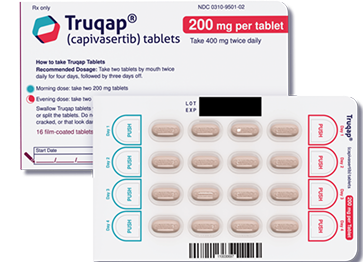
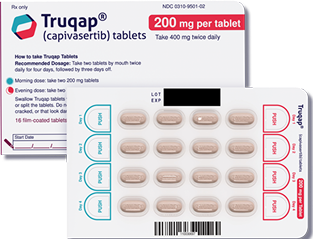
Available in blister packs to help patients track 4 consecutive days on treatment
Dosing Modifications
In combination with abiraterone/prednisone,
Recommended dosage modification of TRUQAP for ARs1
No matter the dose, the dosing schedule remains the same: 4 consecutive days on, 3 days off, every week
First dose reduction
320 mg twice daily for 4 consecutive days followed by 3 days off
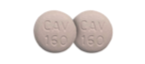
Not actual size.
Two 160-mg tablets BID
Second dose reduction
200 mg twice daily for 4 consecutive days followed by 3 days off

Not actual size.
One 200-mg tablet BID
- Permanently discontinue TRUQAP if unable to tolerate the second dose reduction
- Avoid concomitant use with strong CYP3A inhibitors. If concomitant use with a strong CYP3A inhibitor cannot be avoided, reduce the dosage of TRUQAP to 320 mg orally twice daily for 4 days followed by 3 days off
- When concomitantly used with a moderate CYP3A inhibitor, reduce the dosage of TRUQAP to 320 mg orally twice daily for 4 days followed by 3 days off
- After discontinuation of a strong or moderate CYP3A inhibitor, resume the TRUQAP dosage (after 3 to 5 half-lives of the inhibitor) that was taken prior to initiating the strong or moderate CYP3A inhibitor
- Avoid concomitant use of TRUQAP with strong or moderate CYP3A inducers
Help keep your patients’ treatment on track
Proactive AR management is important2
- Encourage patients to report AR symptoms
- Promptly intervene
- Empower patients with management strategies
Collapse all
FG >ULN-160 mg/dL
or
FG >ULN-8.9 mmol/L
or HbA1C >7%
- Consider initiation or intensification of oral antidiabetic treatment
FG 161-250 mg/dL
or
FG 9-13.9 mmol/L
- Withhold TRUQAP until FG decrease ≤160 mg/dL (or ≤8.9 mmol/L). If recovery occurs in ≤28 days, resume TRUQAP at same dose
- If recovery occurs in >28 days, resume TRUQAP at one lower dose
FG 251-500 mg/dL
or
FG 14-27.8 mmol/L
- Withhold TRUQAP until FG decrease ≤160 mg/dL (or ≤8.9 mmol/L). If recovery occurs in ≤28 days, resume TRUQAP at one lower dose. If recovery occurs in >28 days, permanently discontinue TRUQAP
FG >500 mg/dL
or
FG >27.8 mmol/L
or
life-threatening sequelae of hyperglycemia at any FG level
- Withhold TRUQAP
- For life-threatening sequelae of hyperglycemia or if FG persists at ≥500 mg/dL after 24 hours, permanently discontinue TRUQAP
- If FG ≤500 mg/dL (or ≤27.8 mmol/L) within 24 hours, then follow the guidance earlier in this table for the relevant grade
- Severe hyperglycemia, including diabetic ketoacidosis and fatal outcomes, can occur in patients treated with TRUQAP
- Before initiating treatment with TRUQAP, test FG levels (FPG or FBG), HbA1C levels, and optimize FG
- After initiating treatment with TRUQAP, monitor or self-monitor FG levels on Day 3 or 4 of the dosing week during weeks 1, 2, 4, 6, and 8, then monthly while on treatment with TRUQAP, and as clinically indicated. Monitor HbA1C levels every 3 months during treatment with TRUQAP and as clinically indicated
- Patients with a history of well-controlled type 2 diabetes mellitus may require intensified antihyperglycemic treatment and close monitoring of FG levels
- For patients who experience hyperglycemia during treatment with TRUQAP, monitor FG at least twice weekly, on days on and off TRUQAP, until FG decreases to baseline levels. During treatment with anti-diabetic medications, monitor FG at least once a week for 2 months, followed by once every 2 weeks, or as clinically indicated
- Consider consultation with a healthcare professional with expertise in the treatment of hyperglycemia and initiation of FG monitoring at home for patients who have risk factors for or who experience hyperglycemia
- Advise patients that TRUQAP can cause hyperglycemia and that they will need to monitor their FBG periodically during therapy. Advise patients of the signs and symptoms of hyperglycemia, and counsel patients on lifestyle changes. Advise patients to contact their healthcare provider immediately for signs and symptoms of hyperglycemia
- Withhold TRUQAP immediately when ketoacidosis is suspected. If ketoacidosis is confirmed, permanently discontinue TRUQAP
- Withhold TRUQAP in clinical situations known to increase the risk of severe hyperglycemia or ketoacidosis (eg, suspected serious infection or acute illness)
- The safety of TRUQAP has not been established in patients with Type 1 diabetes or Type 2 diabetes that is uncontrolled or requiring insulin at baseline as these patients were excluded from clinical studies
Grade 2
- Withhold TRUQAP until recovery to ≤Grade 1
- If recovery occurs in ≤28 days, resume TRUQAP at same dose or one lower dose as clinically indicated
- If recovery occurs in >28 days, resume at one lower dose as clinically indicated
- For recurrence, reduce TRUQAP by one lower dose
Grade 3
- Withhold TRUQAP until recovery to ≤Grade 1
- If recovery occurs in ≤28 days, resume TRUQAP at same dose or one lower dose as clinically indicated
- If recovery occurs in >28 days, permanently discontinue TRUQAP
Grade 4
- Permanently discontinue TRUQAP
- Severe diarrhea associated with dehydration occurred in patients who received TRUQAP
- Monitor patients for signs and symptoms of diarrhea and advise patients to increase oral fluids and start antidiarrheal treatment at the first sign of diarrhea while taking TRUQAP
*Grading according to CTCAE Version 5.0.
Grade 2
- Withhold TRUQAP until recovery to ≤Grade 1
- Resume TRUQAP at the same dose
- Persistent or recurrent: Reduce TRUQAP by one lower dose
Grade 3
- Withhold TRUQAP until recovery to ≤Grade 1
- If recovery occurs in ≤28 days, resume TRUQAP at same dose
- If recovery occurs in >28 days, resume TRUQAP at one lower dose
- For recurrent Grade 3, permanently discontinue TRUQAP
Grade 4
- Permanently discontinue TRUQAP
- Cutaneous adverse reactions (CARs), which can be severe, including erythema multiforme, palmar-plantar erythrodysesthesia, and drug reaction with eosinophilia and systemic symptoms, occurred in patients who received TRUQAP
- Monitor patients for signs and symptoms of CARs. An early consultation with a dermatologist is recommended. Withhold, reduce dose, or permanently discontinue TRUQAP based on severity
- Advise patients that TRUQAP can cause CARs and to contact their healthcare provider immediately to report new or worsening rash, erythematous, and exfoliative skin reactions
*Grading according to CTCAE Version 5.0.
Grade 2
- Withhold TRUQAP until recovery to ≤Grade 1
- Resume TRUQAP at the same dose
Grade 3
- Withhold TRUQAP until recovery to ≤Grade 1
- If recovery occurs in ≤28 days, resume TRUQAP at same dose
- If recovery occurs in >28 days, resume TRUQAP at one lower dose
Grade 4
- Permanently discontinue TRUQAP
- Some patients may require closer monitoring; for those with hepatic impairment, monitor for signs and symptoms of increased exposure to TRUQAP
*Grading according to CTCAE Version 5.0.
Discover the safety profile of TRUQAP
Explore safety dataExplore the downloadable resources for TRUQAP
Find helpful resourcesADT=androgen deprivation therapy; AR=adverse reaction; BID=bis in die (twice daily); CAR=cutaneous adverse reaction; CYP3A=cytochrome P450 3A; CTCAE=Common Terminology Criteria for Adverse Events; FBG=fasting blood glucose; FG=fasting glucose; FPG=fasting plasma glucose; HbA1C=glycated hemoglobin; mAPMN/S=metastatic androgen pathway modulation-naïve/sensitive; mHSPC=metastatic hormone-sensitive prostate cancer; Pred=prednisone; PTEN=phosphatase and tensin homolog; ULN=upper limit of normal.
References: 1. TRUQAP® (capivasertib) [prescribing information]. Wilmington, DE: AstraZeneca Pharmaceuticals LP; 2026. 2. Cardoso F, Rihani J, Harmer V, et al. Quality of life and treatment-related side effects in patients with HR+/HER2- advanced breast cancer: findings from a multicountry survey. Oncologist. 2023;28(10):856-865. doi:10.1093/oncolo/oyad207

See Full Indications
Plus
IMPORTANT SAFETY INFORMATION ABOUT TRUQAP® (capivasertib) tablets
IMPORTANT SAFETY INFORMATION ABOUT TRUQAP® (capivasertib) tablets
TRUQAP is contraindicated in patients with severe hypersensitivity to TRUQAP or any of its components.
Hyperglycemia
TRUQAP can cause severe hyperglycemia, including diabetic ketoacidosis and fatal outcomes
Metastatic HR-Positive, HER2-Negative Breast Cancer
- In CAPItello-291, increased fasting glucose (FG) from baseline occurred in 37% of patients treated with TRUQAP, including 11% of patients with Grade 2 (FG >160 to 250 mg/dL), 2% with Grade 3 (FG >250 to 500 mg/dL), and 1.1% with Grade 4 (FG >500 mg/dL) events
- The median time to first occurrence of hyperglycemia was 15 days (range: 1 to 367). Dose reduction for hyperglycemia was required in 0.6% of patients and permanent discontinuation was required in 0.6% of patients. Diabetic metabolic decompensation occurred in 0.6% of patients, including diabetic ketoacidosis in 0.3%
- In the study, 12% (43/355) of patients who received TRUQAP had an anti-hyperglycemic medication regimen either initiated or changed, including treatment with insulin in 4.8% (17/355) of patients
PTEN-Deficient Metastatic Androgen Pathway Modulation-Naïve or -Sensitive Prostate Cancer
- In CAPItello-281, increased fasting glucose (FG) from baseline occurred in 69% of patients treated with TRUQAP, including 25% of patients with Grade 2 (FG >160 to 250 mg/dL), 12% with Grade 3 (FG >250 to 500 mg/dL), and 1.2% of patients with Grade 4 (FG >500 mg/dL) events
- The median time to first occurrence of hyperglycemia was 71 days (range: 1 to 1454). Dose reduction for hyperglycemia was required in 8.7% of patients and permanent discontinuation was required in 2.4% of patients. Diabetic ketoacidosis occurred in 1.2% of patients
- In the study, 41% (204/503) of patients who received TRUQAP had an anti-hyperglycemic medication regimen either initiated or changed, including treatment with insulin in 16% (81/503) of patients
The safety of TRUQAP has not been established in patients with Type 1 diabetes or Type 2 diabetes that is uncontrolled or requiring insulin at baseline as these patients were excluded from clinical studies. Before initiating treatment with TRUQAP, test fasting glucose levels (FPG or FBG), HbA1C levels, and optimize fasting glucose. After initiating treatment with TRUQAP, monitor or self-monitor FG levels on Day 3 or 4 of the dosing week during weeks 1, 2, 4, 6, and 8; then monthly while on treatment with TRUQAP; and as clinically indicated. Monitor HbA1C levels every 3 months during treatment with TRUQAP and as clinically indicated. Patients with a history of well-controlled Type 2 diabetes mellitus may require intensified anti-hyperglycemic treatment and close monitoring of FG levels.
For patients who experience hyperglycemia during treatment with TRUQAP, monitor FG at least twice weekly, on days on and off TRUQAP, until FG decreases to baseline levels. During treatment with anti-diabetic medications, monitor FG at least once a week for 2 months, followed by once every 2 weeks, or as clinically indicated. Consider consultation with a healthcare practitioner with expertise in the treatment of hyperglycemia and initiation of FG monitoring at home for patients who have risk factors for hyperglycemia or who experience hyperglycemia. Advise patients on the signs and symptoms of hyperglycemia and counsel patients on lifestyle changes.
Withhold TRUQAP immediately when ketoacidosis is suspected. If ketoacidosis is confirmed, permanently discontinue TRUQAP. Withhold TRUQAP in clinical situations known to increase the risk of severe hyperglycemia or ketoacidosis (eg, suspected serious infection or acute illness). Based on the severity of hyperglycemia, withhold, reduce dose, or permanently discontinue TRUQAP.
Diarrhea
TRUQAP can cause severe diarrhea associated with dehydration
Metastatic HR-Positive, HER2-Negative Breast Cancer
- In CAPItello-291, diarrhea occurred in 72% of patients. Grade 3 or 4 diarrhea occurred in 9% of patients
- The median time to first occurrence was 8 days (range: 1 to 519). In the study, dose reductions were required in 8% of patients, and 2% of patients permanently discontinued TRUQAP due to diarrhea. In patients with Grade ≥2 diarrhea (n=93) with at least 1 grade improvement (n=89), median time to improvement from the first event was 4 days (range: 1 to 154)
- In the 257 patients with diarrhea, 59% required anti-diarrheal medications to manage symptoms
PTEN-Deficient Metastatic Androgen Pathway Modulation-Naïve or -Sensitive Prostate Cancer
- In CAPItello‑281, diarrhea of any grade occurred in 264 (52%) patients. Grade 3 occurred in 31 (6%) patients and Grade 4 occurred in 1 (0.2%) patient
- The median time to first occurrence was 12 days (range: 3 to 48). In the study, dose reductions were required in 26 (5%) patients and 6 (1.2%) patients discontinued TRUQAP due to diarrhea
- In the 264 patients with diarrhea, anti-diarrheal medication was required in 64% (170/264) of patients to manage diarrhea symptoms
Monitor patients for signs and symptoms of diarrhea. Advise patients to increase oral fluids and start anti-diarrheal treatment at the first sign of diarrhea while taking TRUQAP. Withhold, reduce dose, or permanently discontinue TRUQAP based on severity.
Cutaneous Adverse Reactions
TRUQAP can cause cutaneous adverse reactions, which can be severe, including erythema multiforme (EM), palmar-plantar erythrodysesthesia (PPE), and drug reaction with eosinophilia and systemic symptoms (DRESS).
Metastatic HR-Positive, HER2-Negative Breast Cancer
- In CAPItello-291, cutaneous adverse reactions occurred in 58% of patients. Grade 3 or 4 cutaneous adverse reactions occurred in 17% of patients receiving TRUQAP. EM occurred in 1.7% of patients, and DRESS occurred in 0.3% of patients
- The median time to onset of cutaneous adverse reactions was 13 days (range: 1 to 575 days). Dose reduction was required in 7% of patients and 7% of patients permanently discontinued TRUQAP due to cutaneous adverse reactions
- Among the 204 patients with cutaneous adverse reactions, 44% (90/204) required corticosteroid treatment. Of these, 37% (76/204) were treated with topical corticosteroids and 19% (39/204) with systemic corticosteroids. In patients with Grade ≥2 cutaneous adverse reaction (n=116) with at least 1 grade improvement (n=104), median time to improvement from the first event was 12 days (range: 2 to 544)
PTEN-Deficient Metastatic Androgen Pathway Modulation-Naïve or -Sensitive Prostate Cancer
- In CAPItello-281, cutaneous adverse reactions occurred in 53% of patients. Grade 3 cutaneous adverse reactions occurred in 84 (17%) patients and Grade 4 occurred in 1 (0.2%) patients
- The median time to onset of rash was 13 days (range: 11 to 63 days). In the study, dose reduction was required in 58 (12%) patients and 38 (8%) patients discontinued TRUQAP due to rash
- Among the 265 patients with cutaneous adverse reactions, 80% (212/265) required treatment and 91% (242/265) recovered in the study. Of these, 54% (115/212) were treated with topical corticosteroids and 25% (54/212) with systemic corticosteroids
Monitor patients for signs and symptoms of cutaneous adverse reactions. Early consultation with a dermatologist is recommended. Withhold, reduce dose, or permanently discontinue TRUQAP based on severity.
Embryo-Fetal Toxicity
Based on findings from animals and mechanism of action, TRUQAP can cause fetal harm when administered to a pregnant woman. Advise pregnant women and females of reproductive potential of the potential risk to a fetus. Advise females of reproductive potential to use effective contraception during treatment with TRUQAP and for 1 month after the last dose.
Advise male patients with female partners of reproductive potential to use effective contraception during treatment with TRUQAP and for 4 months after the last dose.
TRUQAP is used in combination with fulvestrant or abiraterone. Refer to the full Prescribing Information of fulvestrant or abiraterone for pregnancy and contraception information.
ADVERSE REACTIONS
Metastatic HR-Positive, HER2-Negative Breast Cancer
- Among the 355 patients who received TRUQAP in CAPItello-291, the most common (≥20%) adverse reactions, including laboratory abnormalities, were diarrhea (72%), cutaneous adverse reactions (58%), increased random glucose (57%), decreased lymphocytes (47%), decreased hemoglobin (45%), increased fasting glucose (37%), nausea and fatigue (35% each), decreased leukocytes (32%), increased triglycerides (27%), decreased neutrophils (23%), increased creatinine (22%), vomiting (21%), and stomatitis (20%)
- In the 155 patients with PIK3CA/AKT1/PTEN alterations treated with TRUQAP + fulvestrant, dose reductions due to adverse reactions were reported in 21% of patients. Permanent TRUQAP discontinuation due to an adverse reaction occurred in 10% of patients. Dose interruptions of TRUQAP occurred in 39% of patients
PTEN-Deficient Metastatic Androgen Pathway Modulation-Naïve or -Sensitive Prostate Cancer
- Among the 503 patients who received TRUQAP in CAPItello-281, the most common (≥20%) adverse reactions including laboratory abnormalities were increased fasting glucose (70%), decreased hemoglobin (61%), decreased lymphocytes (58%), cutaneous adverse reactions (53%), diarrhea (53%), decreased potassium (51%), increased creatinine (49%), increased non-fasting glucose (49%), increased alanine aminotransferase (38%), increased triglycerides (37%), increased aspartate aminotransferase (36%), decreased sodium (30%), and fatigue (26%)
- In the 503 patients treated with TRUQAP + abiraterone and prednisone, dose reductions due to adverse reactions were reported in 32% of patients. Permanent TRUQAP discontinuation due to an adverse reaction occurred in 20% of patients. Dose interruptions of TRUQAP occurred in 65% of patients
DRUG INTERACTIONS
Strong CYP3A Inhibitors: Avoid concomitant use with a strong CYP3A inhibitor. If concomitant use cannot be avoided, reduce the dose of TRUQAP and monitor patients for adverse reactions.
Moderate CYP3A Inhibitors: When concomitantly used with a moderate CYP3A inhibitor, reduce the dose of TRUQAP and monitor patients for adverse reactions.
Strong or Moderate CYP3A Inducers: Avoid concomitant use of TRUQAP with strong or moderate CYP3A inducers.
INDICATIONS AND USAGE
- TRUQAP in combination with fulvestrant is indicated for the treatment of adult patients with hormone receptor (HR)‑positive, human epidermal growth factor receptor 2 (HER2)-negative locally advanced or metastatic breast cancer with one or more PIK3CA/AKT1/PTEN alteration as detected by an FDA-authorized test following progression on at least one endocrine-based regimen in the metastatic setting or recurrence on or within 12 months of completing adjuvant therapy
- TRUQAP in combination with abiraterone and prednisone is indicated for the treatment of adult patients with metastatic androgen pathway modulation-naïve or -sensitive (mAPMN/S) prostate cancer that is PTEN-deficient as detected by an FDA-authorized test
Please see full Prescribing Information, including Patient Information for TRUQAP.
You may report side effects related to AstraZeneca products .
.
IMPORTANT SAFETY INFORMATION
Expand
IMPORTANT SAFETY INFORMATION ABOUT TRUQAP® (capivasertib) tablets
IMPORTANT SAFETY INFORMATION ABOUT TRUQAP® (capivasertib) tablets
TRUQAP is contraindicated in patients with severe hypersensitivity to TRUQAP or any of its components.
Hyperglycemia
TRUQAP can cause severe hyperglycemia, including diabetic ketoacidosis and fatal outcomes
Metastatic HR-Positive, HER2-Negative Breast Cancer
- In CAPItello-291, increased fasting glucose (FG) from baseline occurred in 37% of patients treated with TRUQAP, including 11% of patients with Grade 2 (FG >160 to 250 mg/dL), 2% with Grade 3 (FG >250 to 500 mg/dL), and 1.1% with Grade 4 (FG >500 mg/dL) events
- The median time to first occurrence of hyperglycemia was 15 days (range: 1 to 367). Dose reduction for hyperglycemia was required in 0.6% of patients and permanent discontinuation was required in 0.6% of patients. Diabetic metabolic decompensation occurred in 0.6% of patients, including diabetic ketoacidosis in 0.3%
- In the study, 12% (43/355) of patients who received TRUQAP had an anti-hyperglycemic medication regimen either initiated or changed, including treatment with insulin in 4.8% (17/355) of patients
PTEN-Deficient Metastatic Androgen Pathway Modulation-Naïve or -Sensitive Prostate Cancer
- In CAPItello-281, increased fasting glucose (FG) from baseline occurred in 69% of patients treated with TRUQAP, including 25% of patients with Grade 2 (FG >160 to 250 mg/dL), 12% with Grade 3 (FG >250 to 500 mg/dL), and 1.2% of patients with Grade 4 (FG >500 mg/dL) events
- The median time to first occurrence of hyperglycemia was 71 days (range: 1 to 1454). Dose reduction for hyperglycemia was required in 8.7% of patients and permanent discontinuation was required in 2.4% of patients. Diabetic ketoacidosis occurred in 1.2% of patients
- In the study, 41% (204/503) of patients who received TRUQAP had an anti-hyperglycemic medication regimen either initiated or changed, including treatment with insulin in 16% (81/503) of patients
The safety of TRUQAP has not been established in patients with Type 1 diabetes or Type 2 diabetes that is uncontrolled or requiring insulin at baseline as these patients were excluded from clinical studies. Before initiating treatment with TRUQAP, test fasting glucose levels (FPG or FBG), HbA1C levels, and optimize fasting glucose. After initiating treatment with TRUQAP, monitor or self-monitor FG levels on Day 3 or 4 of the dosing week during weeks 1, 2, 4, 6, and 8; then monthly while on treatment with TRUQAP; and as clinically indicated. Monitor HbA1C levels every 3 months during treatment with TRUQAP and as clinically indicated. Patients with a history of well-controlled Type 2 diabetes mellitus may require intensified anti-hyperglycemic treatment and close monitoring of FG levels.
For patients who experience hyperglycemia during treatment with TRUQAP, monitor FG at least twice weekly, on days on and off TRUQAP, until FG decreases to baseline levels. During treatment with anti-diabetic medications, monitor FG at least once a week for 2 months, followed by once every 2 weeks, or as clinically indicated. Consider consultation with a healthcare practitioner with expertise in the treatment of hyperglycemia and initiation of FG monitoring at home for patients who have risk factors for hyperglycemia or who experience hyperglycemia. Advise patients on the signs and symptoms of hyperglycemia and counsel patients on lifestyle changes.
Withhold TRUQAP immediately when ketoacidosis is suspected. If ketoacidosis is confirmed, permanently discontinue TRUQAP. Withhold TRUQAP in clinical situations known to increase the risk of severe hyperglycemia or ketoacidosis (eg, suspected serious infection or acute illness). Based on the severity of hyperglycemia, withhold, reduce dose, or permanently discontinue TRUQAP.
Diarrhea
TRUQAP can cause severe diarrhea associated with dehydration
Metastatic HR-Positive, HER2-Negative Breast Cancer
- In CAPItello-291, diarrhea occurred in 72% of patients. Grade 3 or 4 diarrhea occurred in 9% of patients
- The median time to first occurrence was 8 days (range: 1 to 519). In the study, dose reductions were required in 8% of patients, and 2% of patients permanently discontinued TRUQAP due to diarrhea. In patients with Grade ≥2 diarrhea (n=93) with at least 1 grade improvement (n=89), median time to improvement from the first event was 4 days (range: 1 to 154)
- In the 257 patients with diarrhea, 59% required anti-diarrheal medications to manage symptoms
PTEN-Deficient Metastatic Androgen Pathway Modulation-Naïve or -Sensitive Prostate Cancer
- In CAPItello‑281, diarrhea of any grade occurred in 264 (52%) patients. Grade 3 occurred in 31 (6%) patients and Grade 4 occurred in 1 (0.2%) patient
- The median time to first occurrence was 12 days (range: 3 to 48). In the study, dose reductions were required in 26 (5%) patients and 6 (1.2%) patients discontinued TRUQAP due to diarrhea
- In the 264 patients with diarrhea, anti-diarrheal medication was required in 64% (170/264) of patients to manage diarrhea symptoms
Monitor patients for signs and symptoms of diarrhea. Advise patients to increase oral fluids and start anti-diarrheal treatment at the first sign of diarrhea while taking TRUQAP. Withhold, reduce dose, or permanently discontinue TRUQAP based on severity.
Cutaneous Adverse Reactions
TRUQAP can cause cutaneous adverse reactions, which can be severe, including erythema multiforme (EM), palmar-plantar erythrodysesthesia (PPE), and drug reaction with eosinophilia and systemic symptoms (DRESS).
Metastatic HR-Positive, HER2-Negative Breast Cancer
- In CAPItello-291, cutaneous adverse reactions occurred in 58% of patients. Grade 3 or 4 cutaneous adverse reactions occurred in 17% of patients receiving TRUQAP. EM occurred in 1.7% of patients, and DRESS occurred in 0.3% of patients
- The median time to onset of cutaneous adverse reactions was 13 days (range: 1 to 575 days). Dose reduction was required in 7% of patients and 7% of patients permanently discontinued TRUQAP due to cutaneous adverse reactions
- Among the 204 patients with cutaneous adverse reactions, 44% (90/204) required corticosteroid treatment. Of these, 37% (76/204) were treated with topical corticosteroids and 19% (39/204) with systemic corticosteroids. In patients with Grade ≥2 cutaneous adverse reaction (n=116) with at least 1 grade improvement (n=104), median time to improvement from the first event was 12 days (range: 2 to 544)
PTEN-Deficient Metastatic Androgen Pathway Modulation-Naïve or -Sensitive Prostate Cancer
- In CAPItello-281, cutaneous adverse reactions occurred in 53% of patients. Grade 3 cutaneous adverse reactions occurred in 84 (17%) patients and Grade 4 occurred in 1 (0.2%) patients
- The median time to onset of rash was 13 days (range: 11 to 63 days). In the study, dose reduction was required in 58 (12%) patients and 38 (8%) patients discontinued TRUQAP due to rash
- Among the 265 patients with cutaneous adverse reactions, 80% (212/265) required treatment and 91% (242/265) recovered in the study. Of these, 54% (115/212) were treated with topical corticosteroids and 25% (54/212) with systemic corticosteroids
Monitor patients for signs and symptoms of cutaneous adverse reactions. Early consultation with a dermatologist is recommended. Withhold, reduce dose, or permanently discontinue TRUQAP based on severity.
Embryo-Fetal Toxicity
Based on findings from animals and mechanism of action, TRUQAP can cause fetal harm when administered to a pregnant woman. Advise pregnant women and females of reproductive potential of the potential risk to a fetus. Advise females of reproductive potential to use effective contraception during treatment with TRUQAP and for 1 month after the last dose.
Advise male patients with female partners of reproductive potential to use effective contraception during treatment with TRUQAP and for 4 months after the last dose.
TRUQAP is used in combination with fulvestrant or abiraterone. Refer to the full Prescribing Information of fulvestrant or abiraterone for pregnancy and contraception information.
ADVERSE REACTIONS
Metastatic HR-Positive, HER2-Negative Breast Cancer
- Among the 355 patients who received TRUQAP in CAPItello-291, the most common (≥20%) adverse reactions, including laboratory abnormalities, were diarrhea (72%), cutaneous adverse reactions (58%), increased random glucose (57%), decreased lymphocytes (47%), decreased hemoglobin (45%), increased fasting glucose (37%), nausea and fatigue (35% each), decreased leukocytes (32%), increased triglycerides (27%), decreased neutrophils (23%), increased creatinine (22%), vomiting (21%), and stomatitis (20%)
- In the 155 patients with PIK3CA/AKT1/PTEN alterations treated with TRUQAP + fulvestrant, dose reductions due to adverse reactions were reported in 21% of patients. Permanent TRUQAP discontinuation due to an adverse reaction occurred in 10% of patients. Dose interruptions of TRUQAP occurred in 39% of patients
PTEN-Deficient Metastatic Androgen Pathway Modulation-Naïve or -Sensitive Prostate Cancer
- Among the 503 patients who received TRUQAP in CAPItello-281, the most common (≥20%) adverse reactions including laboratory abnormalities were increased fasting glucose (70%), decreased hemoglobin (61%), decreased lymphocytes (58%), cutaneous adverse reactions (53%), diarrhea (53%), decreased potassium (51%), increased creatinine (49%), increased non-fasting glucose (49%), increased alanine aminotransferase (38%), increased triglycerides (37%), increased aspartate aminotransferase (36%), decreased sodium (30%), and fatigue (26%)
- In the 503 patients treated with TRUQAP + abiraterone and prednisone, dose reductions due to adverse reactions were reported in 32% of patients. Permanent TRUQAP discontinuation due to an adverse reaction occurred in 20% of patients. Dose interruptions of TRUQAP occurred in 65% of patients
DRUG INTERACTIONS
Strong CYP3A Inhibitors: Avoid concomitant use with a strong CYP3A inhibitor. If concomitant use cannot be avoided, reduce the dose of TRUQAP and monitor patients for adverse reactions.
Moderate CYP3A Inhibitors: When concomitantly used with a moderate CYP3A inhibitor, reduce the dose of TRUQAP and monitor patients for adverse reactions.
Strong or Moderate CYP3A Inducers: Avoid concomitant use of TRUQAP with strong or moderate CYP3A inducers.
INDICATIONS AND USAGE
- TRUQAP in combination with fulvestrant is indicated for the treatment of adult patients with hormone receptor (HR)‑positive, human epidermal growth factor receptor 2 (HER2)-negative locally advanced or metastatic breast cancer with one or more PIK3CA/AKT1/PTEN alteration as detected by an FDA-authorized test following progression on at least one endocrine-based regimen in the metastatic setting or recurrence on or within 12 months of completing adjuvant therapy
- TRUQAP in combination with abiraterone and prednisone is indicated for the treatment of adult patients with metastatic androgen pathway modulation-naïve or -sensitive (mAPMN/S) prostate cancer that is PTEN-deficient as detected by an FDA-authorized test
Please see full Prescribing Information, including Patient Information for TRUQAP.
You may report side effects related to AstraZeneca products.